Tell us about the job
Takes about a minute. No obligation.
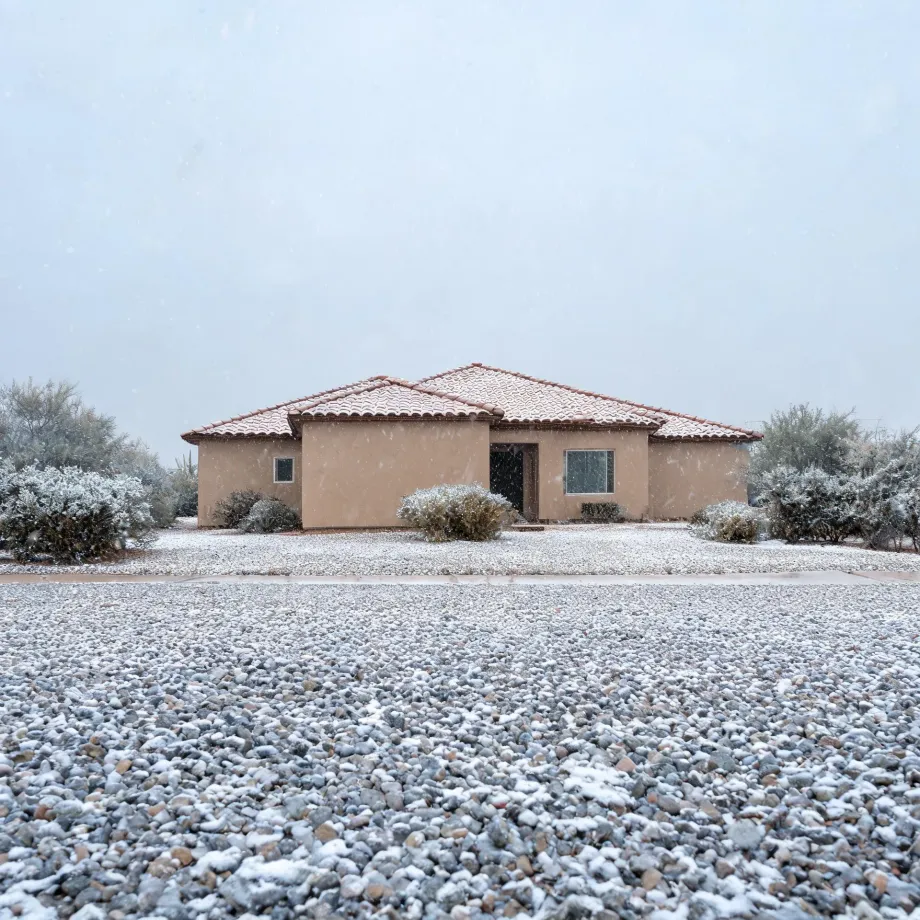
Sizing a furnace for Eureka County starts with the load calculation, and a contractor who skips that step is guessing at a system that will cycle through most of the year. Homes in Eureka County, NV run heat about ten months a year, from September through June. The burner, the heat exchanger, and the ignition system carry that work directly. A unit that is undersized runs longer cycles to reach setpoint, and those extra cycles compound across a season this long. A contractor quoting a replacement here has to establish what the existing system was actually rated for, because an install that was close enough somewhere milder will not hold up here.
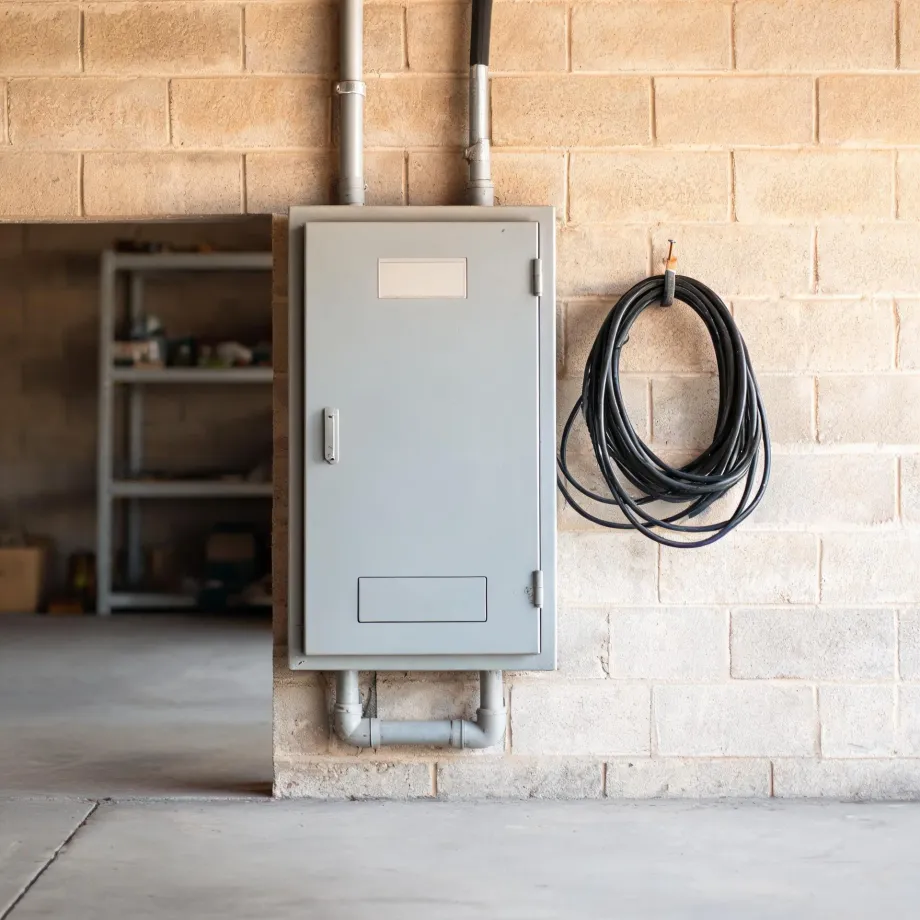
Ductwork laid down for equipment that has since been replaced is what a furnace installer has to reckon with here before anything else. Half the homes in Eureka County, Nevada were built in 1988 or earlier (2020-2024 ACS 5-year). That means the ducting in a large share of the county's homes was designed around different load requirements than a current furnace produces, and a contractor has to verify it will carry the new system before the job can be priced or started. Where it will not, the ductwork becomes the real scope of the project.
What Gets Installed With a New Furnace
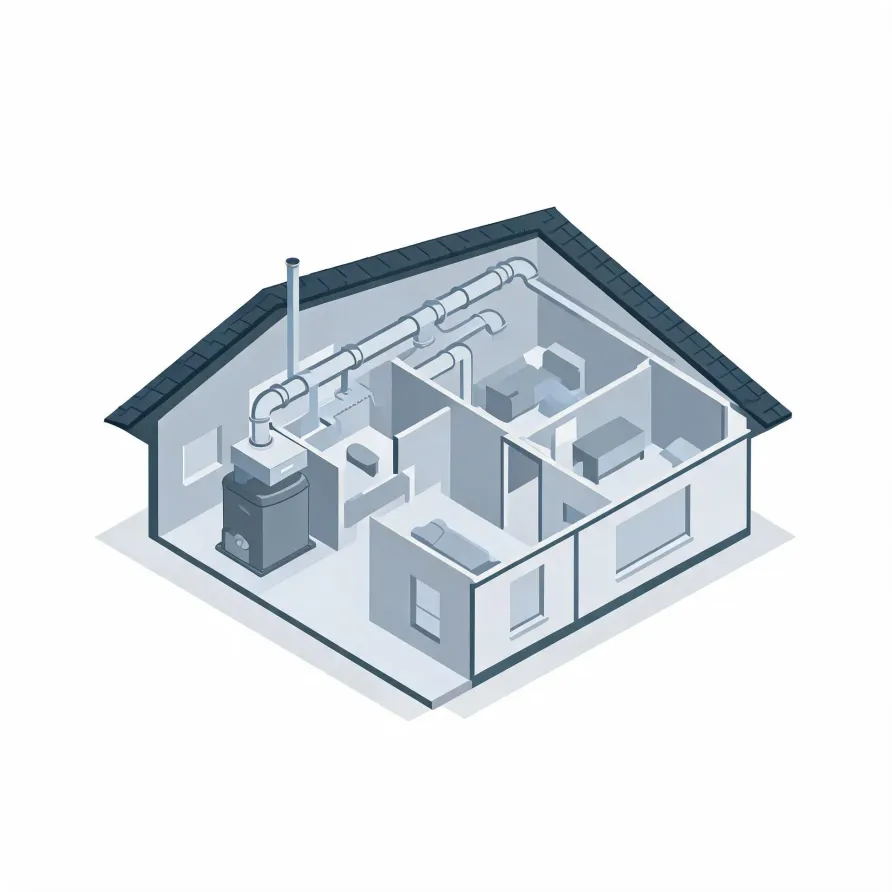
The furnace itself sits inside the house, almost always in a utility room, basement, or closet. It is the unit that generates heat by burning fuel or running electrical elements through a heat exchanger. The blower motor inside that cabinet is what pushes the heated air forward into the rest of the system.
The flue pipe runs from the furnace to an exterior wall or roofline, carrying combustion gases out of the house. Alongside that, a contractor installs the thermostat on an interior wall where it reads the living space temperature and tells the furnace when to fire and when to shut off.
The drawing shows a general layout of these components, and a licensed contractor determines exactly what applies to your house and its existing setup.
Get matched in Eureka CountyEureka County by the numbers
203 severe weather events were recorded in Eureka County, Nevada between 2015 and 2024.
NOAA National Centers for Environmental Information, Storm Events Database, bulk CSV export, events 2015-01-01 through 2024-12-31.Half the homes in Eureka County, Nevada were built in 1988 or earlier (2020-2024 ACS 5-year).
U.S. Census Bureau, 2020-2024 American Community Survey 5-Year EstimatesEureka County, Nevada holds 976 housing units (2020-2024 ACS 5-year).
U.S. Census Bureau, 2020-2024 American Community Survey 5-Year EstimatesOwners occupy 83.0% of the occupied homes in Eureka County, Nevada (2020-2024 ACS 5-year).
U.S. Census Bureau, 2020-2024 American Community Survey 5-Year EstimatesFurnace & HVAC Installation Rules for Eureka County, Nevada5 codes & standards
What the Installation Actually Looks Like
Non-weatherized gas furnaces manufactured on or after November 19, 2015 must reach 80.0 percent AFUE.
Non-weatherized oil-fired furnaces manufactured on or after November 19, 2015 must reach 83.0 percent AFUE.
Mobile home gas furnaces manufactured on or after November 19, 2015 must reach 80.0 percent AFUE.
Non-weatherized gas furnaces manufactured on or after December 18, 2028 must reach 95.0 percent AFUE, up from the 80.0 percent minimum that applies to units manufactured before that date.
Licensing Rules for HVAC Work in Eureka County, Nevada
In Nevada refrigeration and air-conditioning work is specialty contracting, and a general building contractor may not perform it without holding the licence for that specialty.
Severe Weather in Eureka County
Eureka County's climate puts real demands on heating equipment, and those demands vary by how hard the weather pushes the system year after year. A furnace sized and installed for local conditions holds up differently than one specified without that context.
203 severe weather events, 2015–2024. Source: NOAA National Centers for Environmental Information, Storm Events Database.