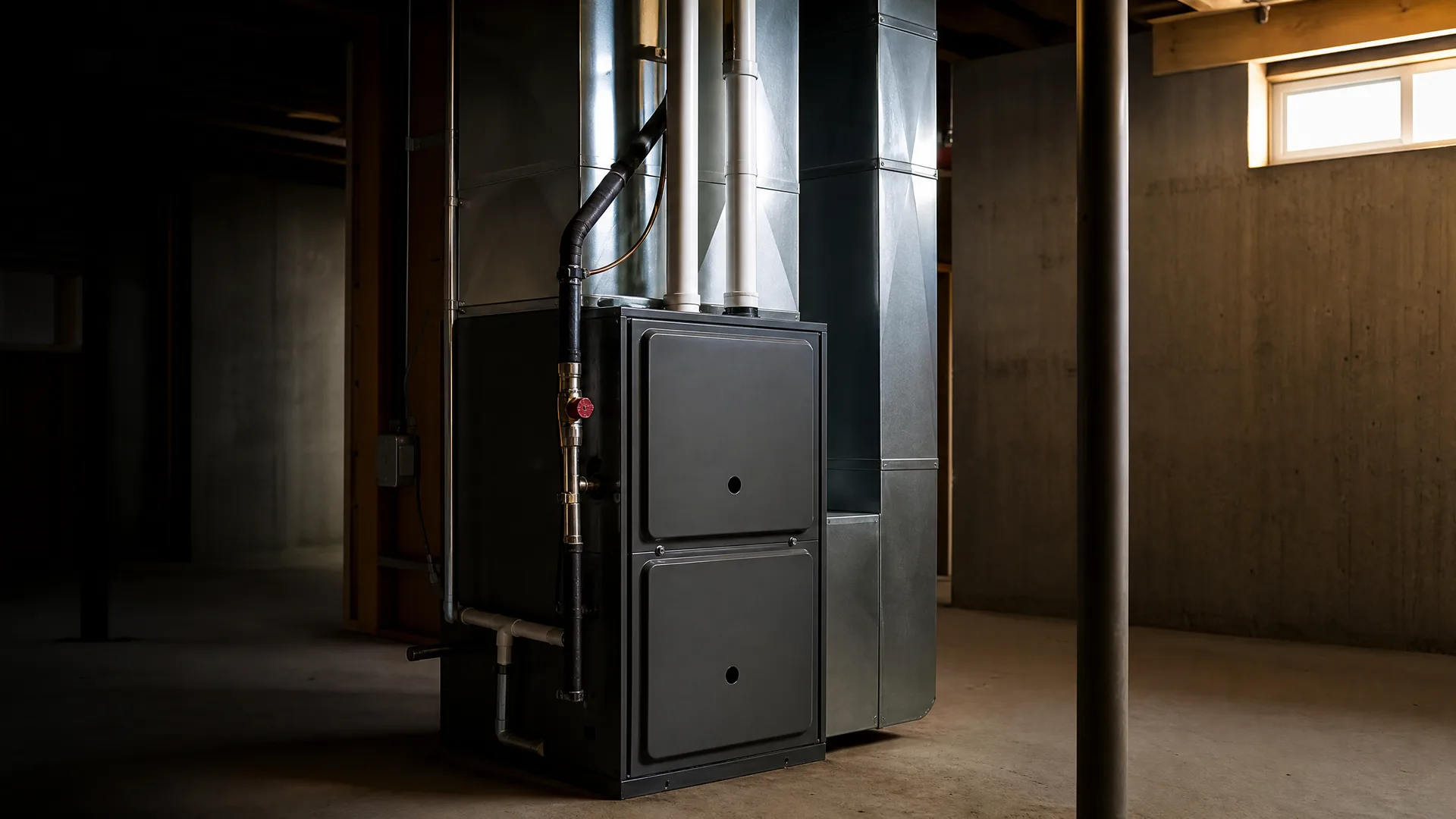
A gray high-efficiency furnace with two white PVC vent pipes stands beside galvanized sheet-metal ductwork in a dim basement with exposed joists and a concrete floor.

Get the right pro for your furnace

Why your furnace won't shut off in Nevada

A furnace that keeps running past the point where your house feels warm enough usually comes down to the thermostat, the blower, or a stuck limit switch. This page gets into why gas furnaces in Nevada homes do this and what a licensed local contractor checks first to find the cause.

Get matched

A furnace that won't shut off is usually stuck in one of two ways. Either the thermostat never tells it to stop, or it's telling it to stop and the furnace isn't listening. A thermostat set wrong, wired wrong, or placed somewhere it reads the room poorly will keep calling for heat long after your house is warm. If the thermostat is doing its job, the problem is likely the limit switch or the blower. The limit switch is supposed to shut the burners off if the furnace overheats, and if it's stuck or failing, the furnace can keep firing when it shouldn't. A blower that isn't moving enough air past the heat exchanger can trigger that same overheating, especially if the filter is dirty or a duct is blocked. None of this is something to leave running while you figure it out. A furnace that won't stop can overheat parts it shouldn't, and that's a safety issue, not just a comfort one.

A woman with long wavy brown hair in a grey ribbed sweater sits on a couch indoors, looking toward a window, with a potted palm-like plant and fireplace behind her.
A woman with long brown hair wearing a green V-neck top and beige cardigan sits on a light sofa, looking off to the side, with a dining table, lamp and framed picture in the background.
A woman with long dark hair in a cream knit sweater sits on a beige sofa indoors, looking toward a bright window with a houseplant and framed picture in the background.
A woman with long dark hair in a green knit sweater sits on a couch indoors, smiling and looking toward a window with a blurred room behind her.

A furnace runs on a simple loop. The thermostat closes a circuit asking for heat, the furnace fires, and warm air moves through the ducts until the thermostat opens that circuit back up. When a furnace won't shut off, something in that loop is broken, not the burners or the igniter. Those just answer whatever call they're given. Inside the cabinet, a limit switch is watching the air temperature near the heat exchanger, ready to cut the burners if things run too hot. A weak blower or a dirty filter can let heat build up around that switch, which either trips it or throws off its reading. Meanwhile, if the house genuinely isn't reaching the temperature on the thermostat, the furnace will keep firing because it's doing exactly what it's told. Some thermostats also have a delay built in that slows down how fast they recognize the room has warmed up. None of these are the same problem, and they don't get fixed the same way. A contractor working on your system would check the limit switch, the airflow, and the thermostat itself before touching anything else.

How a furnace knows to stop

  • The thermostat calls for heat by closing a low voltage circuit, and if that circuit stays closed the furnace has no reason to stop.
  • Inside the furnace, a limit switch watches the temperature of the air near the heat exchanger and shuts the burners off if it gets too hot.
  • If the blower motor is weak or the filter is clogged, heat builds up around the limit switch and can trip it, or in some cases keep it from reading correctly.
  • A furnace that keeps firing but never gets the house warm enough will keep running because the thermostat keeps asking for more heat.
  • The gas valve and igniter only control whether the burners are lit, so even a healthy valve and igniter will keep answering a call that never ends.
  • Some thermostats have a built in delay or anticipator that can be set wrong, which makes the thermostat slow to recognize the room has reached temperature.
A gray high-efficiency furnace with two PVC vent pipes stands in an unfinished basement beside sheet-metal ductwork, a framed and plastic-covered wall, and a bare concrete wall with vertical pipes.
A furnace running like this heats the ductwork steadily and shuts off once the blower catches up with the burners.
A gray furnace cabinet in a basement, connected to galvanized sheet-metal ductwork and white PVC pipes, against a concrete wall with exposed metal piping and insulation overhead.
A furnace stuck like this keeps the burners firing well past the point where the limit switch should have cut them.

What a stuck furnace costs you

  • A furnace stuck running can push the house well past your thermostat setting before anyone notices.
  • Gas keeps firing the whole time, so your bill reflects hours of burner time you never meant to use.
  • A cracked heat exchanger gets more likely the longer the furnace overheats instead of cycling off normally.
  • A blower that won't stop or a limit switch that's failing can both strain the motor over time.
  • With power cheap here, the bigger cost is usually the gas burned, not the electricity to run the blower.
  • A house that's too warm at 2 a.m. is often the first sign someone in the house will actually notice.

A furnace that won't shut off doesn't announce itself right away. The house just gets warmer than you set it, slowly, until someone notices it's too warm to sleep or the air feels stale from running so long. By the time that happens, the burners have usually been firing for hours past when they should have stopped. In Nevada, with gas heating most homes and power cheap, that extra run time shows up on the gas side of the bill, not the electric side. The blower pulling double duty is the smaller concern.

The bigger concern is what's happening inside the furnace while it keeps running. The heat exchanger is built to handle heat in cycles, burners on, burners off, air moving to carry the heat away. When the limit switch doesn't catch and the furnace just keeps firing, that metal sits hot longer than it was designed to. Do that often enough and the risk of a crack goes up. A blower motor that never gets a break wears the same way any motor does when it's asked to run past its normal stretch.

None of this means the furnace is failing tonight. It means the part that's supposed to stop it isn't doing its job, and the longer that goes unchecked, the more it costs in gas and the more it asks of parts that were built to rest between cycles.

An older woman with gray hair in a bun and glasses, wearing a beige knit sweater, smiles while looking to the side in a warmly lit kitchen, with a loaf of bread on the counter in the foreground and a snowy scene outside the window.
A woman with her hair in a bun holds a sleeping young child against her chest, both wrapped in a textured beige knit blanket on a sofa in a dimly lit room with a lamp, framed picture, and bookshelf behind them.

A pro who works on furnaces

A furnace that won't shut off doesn't fix itself, and leaving it running costs you gas every hour it keeps firing. Nevada gas prices make that add up fast, and the longer it runs past where it should cut off, the more likely you're looking at a limit switch or a cracked heat exchanger, not just a thermostat setting. Someone who works on furnaces in Nevada homes all season knows which of those it usually turns out to be, and can tell faster because of it. Get matched with a licensed contractor local to you, someone who services this equipment regularly rather than once in a while, and who you can talk to directly instead of juggling calls from several companies. Your furnace won't sort this out by running longer. The sooner a contractor looks at the thermostat wiring, the limit switch, and the blower, the sooner it stops costing you gas and wear it doesn't need to.

A gas furnace is built to cycle, not to run straight through. Most systems fire for a stretch, satisfy the thermostat, and shut down until the house drifts cold again.

One that never reaches the off part of that cycle isn't working harder for you, it's just burning gas with nowhere for that heat to go once the house is already warm.

Winter nights average 33°F statewide

Nights here average 33°F through December, January and February, cold enough that your furnace is cycling on through most of the night, not just running once at bedtime. A furnace that won't shut off on a night that cold burns gas for hours longer than it should, and the house still may not feel any warmer.

NOAA nClimDiv 1991-2020 county normals weighted by homes

A gray furnace cabinet in a basement with sheet-metal ductwork, white PVC vent pipes, and black gas piping against a concrete wall and wood-framed partition on a bare concrete floor.

Cycling the way it should

This furnace fires, heats the duct work, and shuts off once the blower catches up. The burners rest between calls for heat, which is what keeps a gray metal furnace like this running for years on a concrete basement floor without strain.

A gray metal furnace with two white PVC vent pipes stands on a concrete floor beside galvanized sheet-metal ductwork in a basement or utility space with wood framing.

Stuck on past its limit

This furnace shows surface rust after running longer than it should, hour after hour. The PVC intake and exhaust pipes keep venting because the burners never got the signal to stop, and the plenum above it stays hot well past when it should have cooled.

Thermostat Issue or Furnace Problem

Thermostat problem

  • A thermostat set a few degrees too high keeps calling for heat long after the house feels warm.
  • A loose or corroded wire at the thermostat can hold the circuit closed even after you turn the dial down.
  • A thermostat mounted near a heat vent or in direct sun reads the room wrong and keeps calling long past where it should stop.
  • Once a contractor checks the wiring and the setting, the furnace usually shuts off the next time it's tested.
  • This kind of problem doesn't damage the furnace itself, but it runs up your gas bill every night it goes uncaught.

Furnace not listening

  • A stuck limit switch means the furnace keeps firing even after the thermostat has told it to stop.
  • A failed relay or control board can keep the burners running independent of what the thermostat is doing.
  • This kind of failure runs the risk of overheating the heat exchanger the longer it goes unchecked.
  • A contractor who works on these furnaces every winter in Nevada can usually tell which part failed by how the furnace is behaving.
  • This takes a hands-on diagnosis, since the thermostat alone won't show what's wrong inside the furnace.
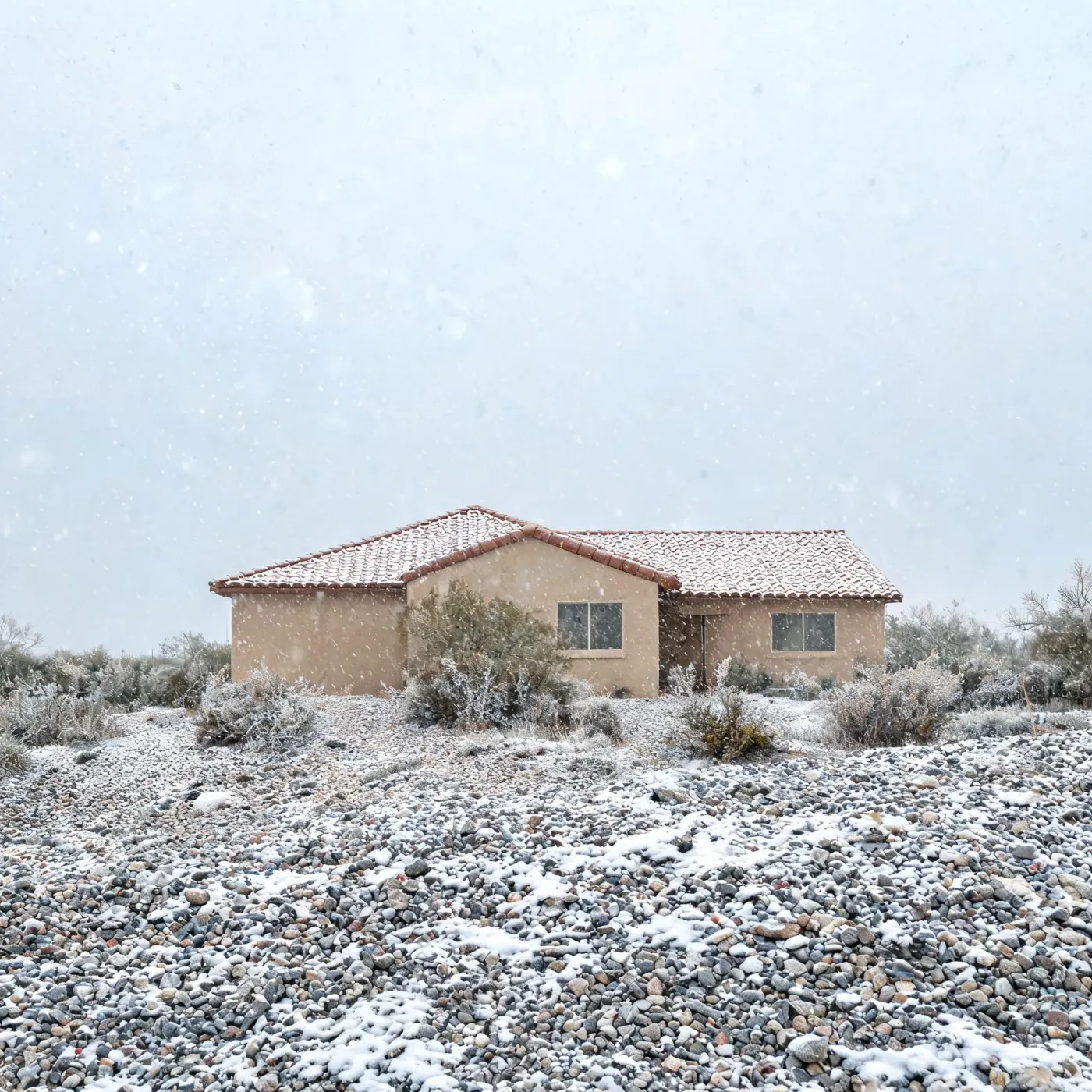
A single-story stucco house with a tile roof stands behind snow-dusted desert scrub and a broad field of gravel during falling snow under a pale sky.

Statewide, winter nights average 33°F, according to NOAA climate data. That's not a hard freeze, but it's cold enough that your furnace has to keep catching up through the night rather than firing once and holding. If the thermostat or limit switch is stuck, the furnace doesn't get a break between calls for heat. You'll notice the blower running long stretches, the house warmer than the thermostat setting, and the furnace still firing when you check on it hours later.

NOAA nClimDiv 1991-2020 county normals weighted by homes

What are you noticing right now in your house

You probably noticed because a room that should feel done feels too warm, or the air coming out of the vents has been blowing for longer than usual. The furnace might be loud enough to hear from another room, running straight through instead of clicking off and resting. Touch a vent and the air feels hot rather than warm. If nobody catches it, the house keeps climbing past where you set the thermostat, and the furnace keeps burning gas the whole time. Left running long enough, the heat exchanger takes more stress than it was built for on any single cycle, which is the part worth having someone look at before it becomes the bigger problem.

A beige high-efficiency furnace stands on a concrete basement floor beside sheet-metal ductwork, with white PVC vent pipes and a gas line running along an insulated wood-framed wall.

Running right

This is a furnace cycling the way it should. It fires, pushes heat through the ductwork, and the burners shut off once the blower catches up and the thermostat is satisfied. The gas line and flue are doing their job for a few minutes at a time, then resting until the house calls for heat again.

An older metal furnace with a louvered front panel stands against a concrete basement wall, connected to sheet-metal ductwork and a flue pipe, with copper and steel pipes running alongside.

Stuck on

This furnace has been firing longer than it should. Dust built up on the cabinet like this often means a unit that is running more hours than it used to, not less. If the burners keep going past where the thermostat should have cut them off, something downstream of the gas valve isn't hearing the signal to stop.

A woman in a cream sweater and jeans stands in the open doorway of a white stucco house, holding the dark door, while a man in a dark quilted jacket seen from behind walks toward the entry past potted plants.

A furnace that won't shut off needs a hand, not a thermostat guess

Whatever you're hearing from the vents right now, a furnace that won't shut off comes down to the thermostat not calling it off or the furnace not listening when it does. Nobody can tell which from across the room, and it isn't something to leave running through a 33 degree night while you decide. A contractor can open the thermostat and the furnace itself and find which one it is.

You'll be matched with one licensed contractor local to Nevada, not a handful competing for your callback. Someone who works on gas furnaces through the winter here knows a stuck limit switch from a bad thermostat wire fast, because they've found both before in houses like yours. They'll reach out to you directly once you're matched, and you can get back to keeping the house at the temperature you actually set.

Interior corner with a beige sofa holding a dark green and a light cushion and a textured throw, a potted small-leaved tree beside a white-framed window, and a dark shallow bowl on a wooden coffee table in the foreground.
A dark gray high-efficiency furnace with two white vent pipes and connected sheet-metal ductwork stands in an unfinished basement with concrete walls, a support pole, and a small window.

Get your furnace to the right pro

Step 1 of 3: Equipment