Why one room stays cold in a Nevada winter

Step 1 of 3: Equipment

Why is one room in my house always cold in the winter?

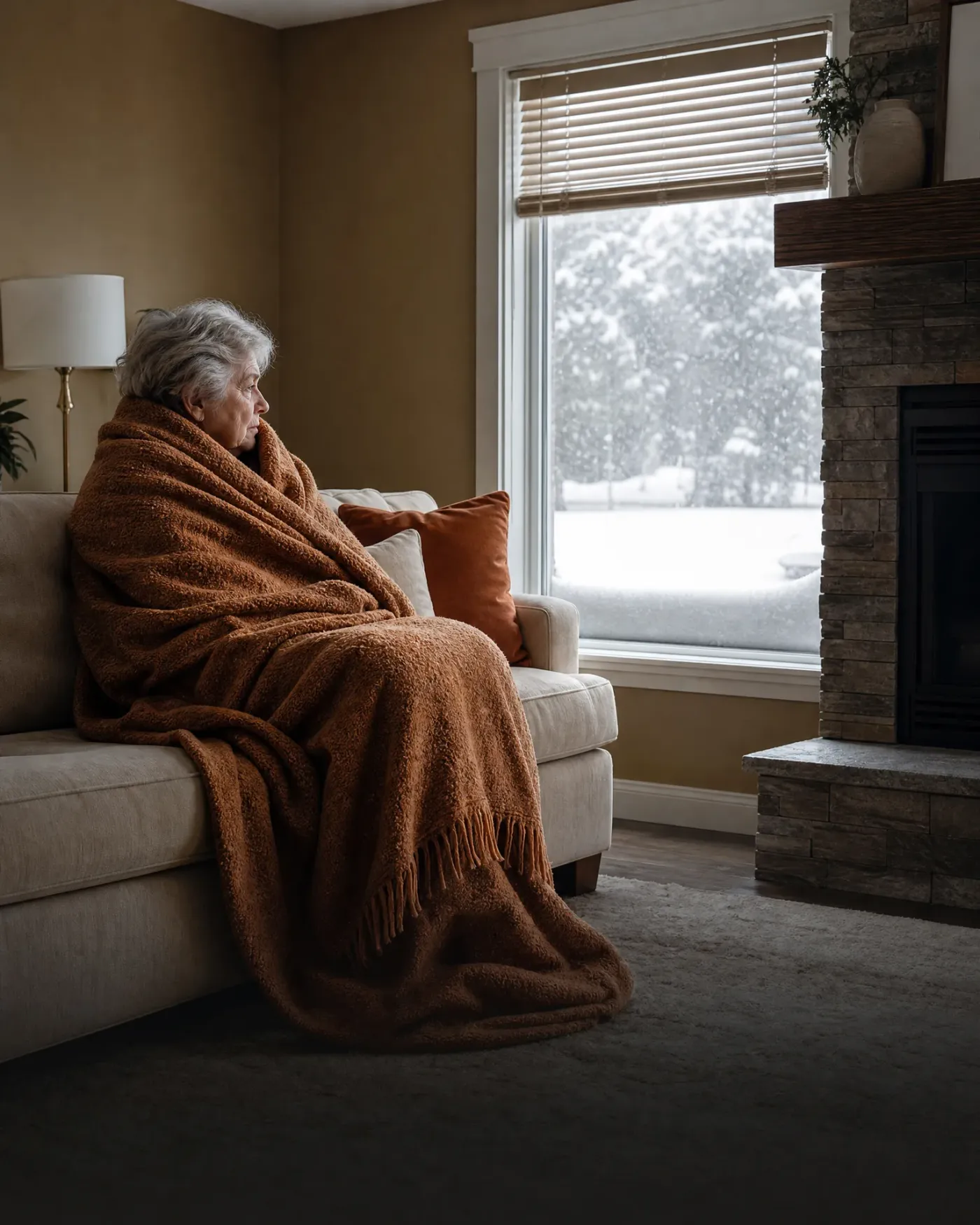
You keep a space heater running in one room while the rest of the house is fine. The thermostat says the furnace is working, the vents aren't blocked, and yet by the time the air gets to that one room, it's noticeably cooler than everywhere else. You want to know if this is a duct problem, a furnace problem, or just that room.

That room is losing heat on the way there, or losing it once it arrives

The furnace is making enough heat. The air just isn't getting to that room at the temperature it left at. A duct run that's longer than the others, passes through a garage or attic, or has a loose joint will drop heat before it ever reaches the vent. It can also be the room itself: a north-facing wall, a window, or less insulation than the rooms around it. In most Nevada homes, gas heat runs hard through the winter, so a weak spot like this shows up fast and stays obvious until it's found. A contractor can check the duct run and the airflow at that vent to see which one it is.

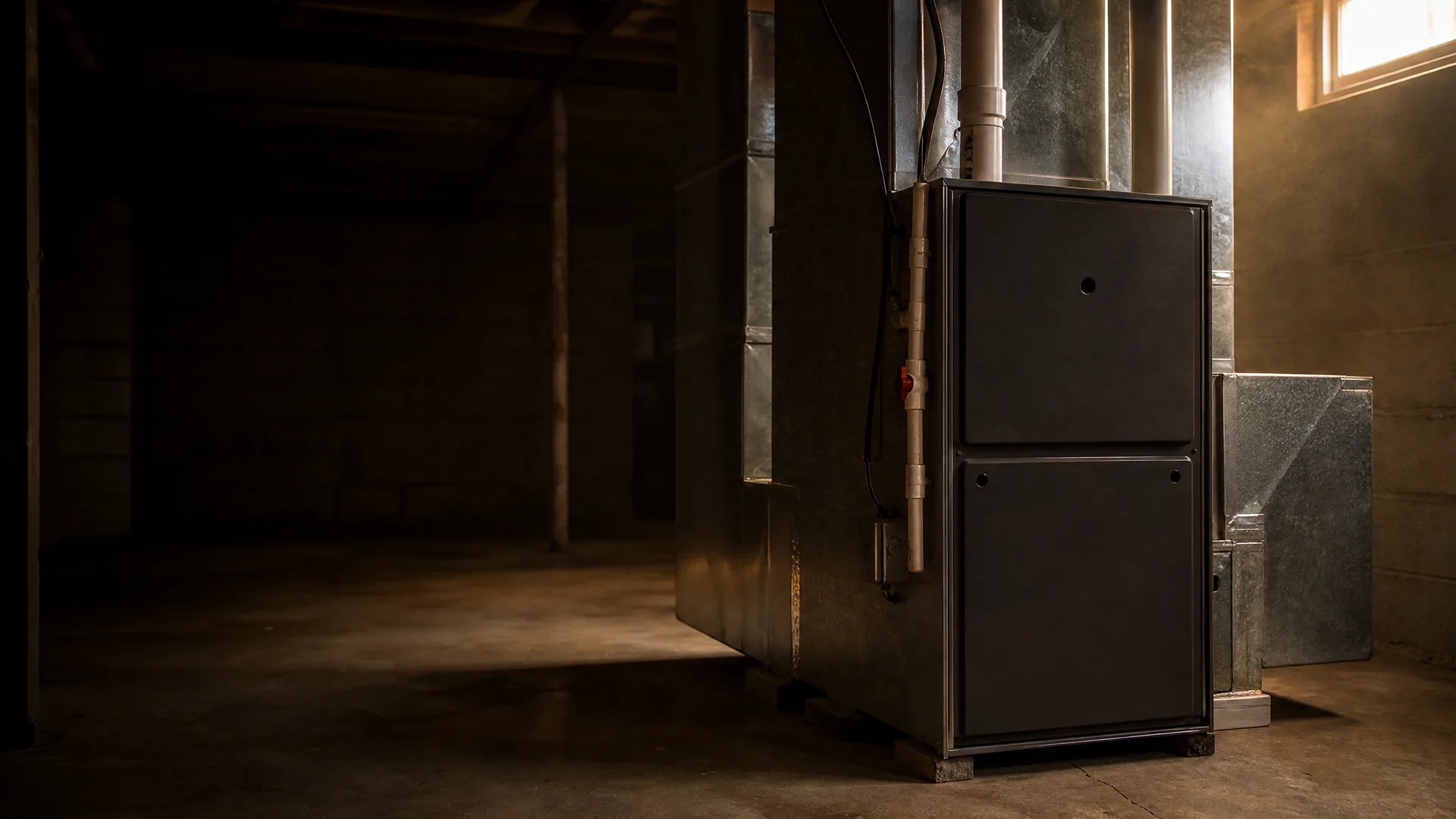
A dark residential basement with a concrete floor and block walls, containing a furnace with two access panels connected to galvanized sheet-metal ductwork and a white vent pipe, lit by a small window at upper right.

You're down in the basement around six, after the sun's gone and the cold's settled in the way it does on a November night out here. The furnace sits there dark. No hum, no blower, nothing. You put a hand near the vent and feel nothing coming through. A thin haze of dust hangs in the air by the cabinet, stirred up from when you banged on the side of it trying to get it to kick on. That back bedroom's been cold for weeks, and you'd told yourself it was just a duct run that got the short end. Now the whole system's quiet and you're standing in the basement in your coat, waiting for a sound that isn't coming.
Is It the Ducts or the Room

Duct Problem

  • If that room is far from the furnace, the duct run to it loses more heat along the way than runs closer to the furnace.
  • A duct that's crimped, disconnected, or crushed behind a wall will starve that one room while the rest of the house heats fine.
  • A duct running through an attic or crawlspace carries heat away before it reaches the register, especially on the coldest nights.
  • Closing vents in unused rooms to push more air elsewhere can unbalance the whole system and leave a different room short.
  • A contractor can check airflow at that specific register against the others to see if the duct itself is the problem.

Room Itself

  • A room with a window or a wall facing north loses heat faster than the rest of the house no matter what the furnace is doing.
  • Gaps around a window frame or an exterior door let warm air leak out and cold air in, faster than the furnace can keep up.
  • A room over a garage or built above a crawlspace has less insulation underneath it than rooms over a heated basement or slab.
  • An older addition built onto the house may not share the same insulation as the original rooms.
  • A room with little furniture or carpet holds less heat once the furnace cycles off, so it cools faster between cycles.
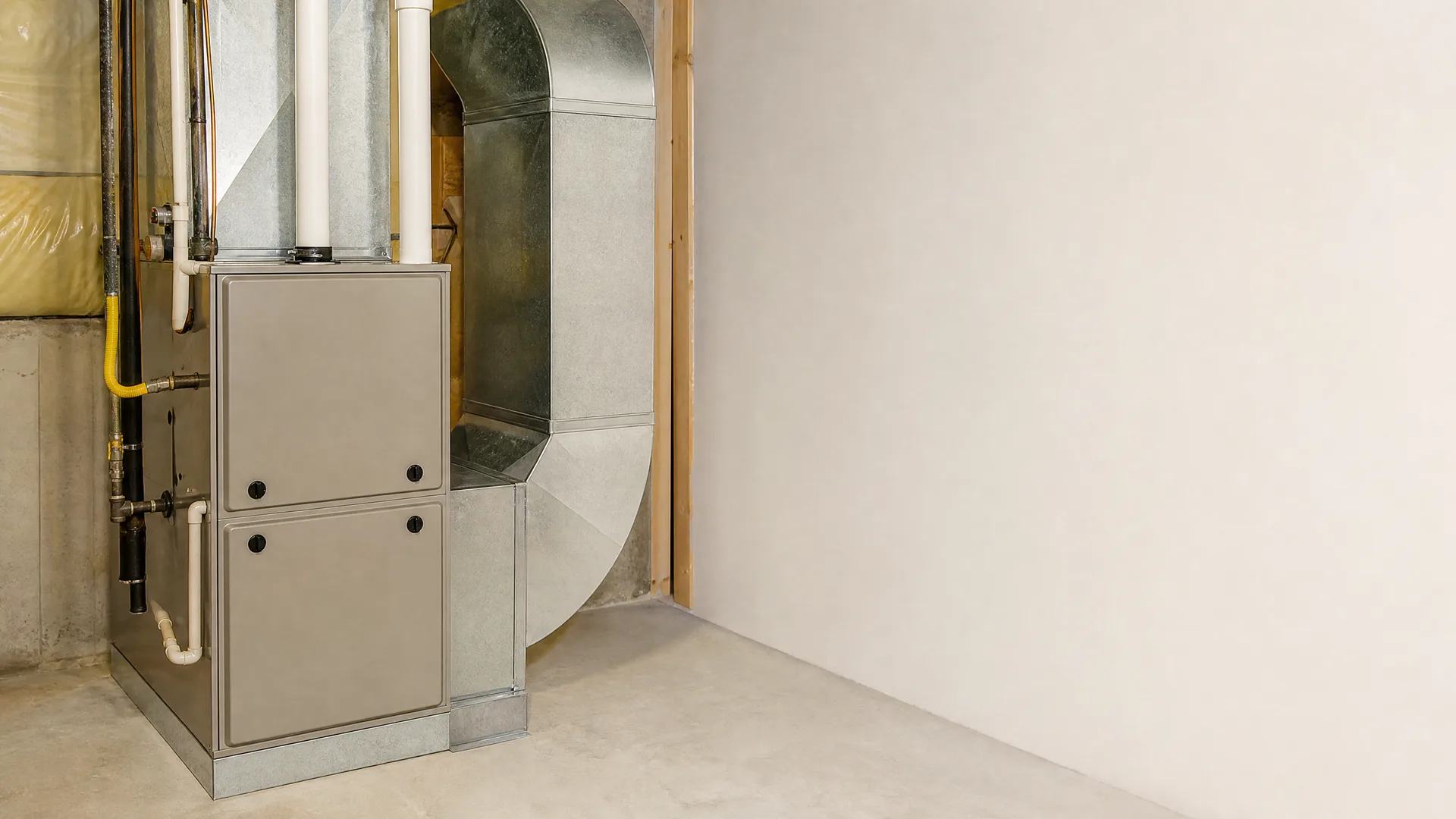
A gas furnace with sheet-metal ductwork, PVC vent pipes and copper and black piping stands against a wall in a basement with a bare light-colored wall and concrete floor.

Why distance from the furnace matters

Warm air cools as it travels. A duct run of 40 feet loses more heat than one of 10 feet, even when both are the same size and both are insulated the same way. The room farthest from the furnace gets air that started out at the same temperature as everywhere else, but arrives cooler because it had farther to go. That's why the cold room is so often the one at the far end of the house, or the one over the garage.

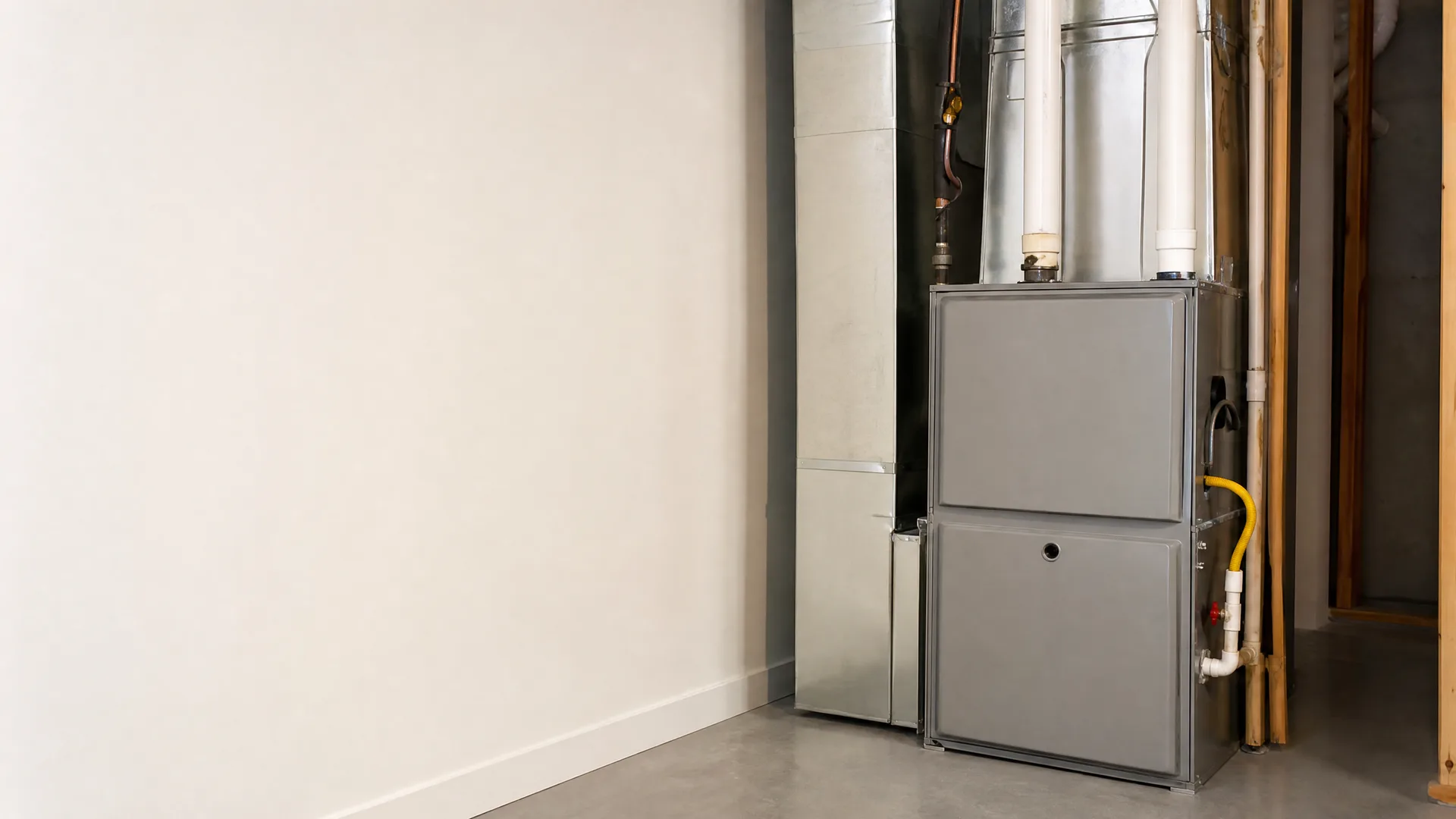
A gray furnace with attached sheet-metal ductwork, white PVC vent pipes, copper and yellow gas lines stands against a wall in a room with a plain white wall and concrete floor.

What a blower can't fix

The blower pushes a fixed amount of air through the whole duct system, not more to the room that needs it. If one branch is pinched or partly closed off, the air doesn't back up and find another way there. It just doesn't arrive. A thermostat reading 70 degrees only confirms the air near the thermostat is warm. It says nothing about the room down the hall or in the basement.

A man in a dark blue shirt stands in an open front doorway of a stucco and wood-clad house, facing a blond woman seen from behind in the foreground on a stone walkway.

How the furnace decides which room gets heat

The furnace doesn't send more air to one room and less to another. It pushes a fixed amount of air through the plenum, and the ductwork splits that air by whatever path is easiest. A room with a short, straight run gets a fair share. A room at the end of a long run, with a few extra turns, gets whatever's left after the air pressure drops along the way. The blower doesn't know the difference. It just runs at the same speed either way.

That's why closing vents in other rooms to "push" air toward the cold one usually backfires. It raises pressure in the system and can reduce total airflow, so the cold room ends up with less, not more. A contractor who sees the layout can tell whether the fix is a duct run, a damper that's out of balance, or something in that room working against the furnace. Once someone's looked at how your system is actually built, the guesswork is over.

Interior corner of a living room with a beige upholstered sofa and dark cushion in the foreground, a ceramic vase of leafy branches on a dark side table by a curtained window, a framed picture on the wall, and a wood-surround fireplace at right.
A gray furnace with sheet-metal ductwork, PVC vent pipes and a yellow gas line stands on a concrete basement floor beside wooden stair framing.

The furnace running the way it should

Air moves through the ductwork and reaches every room at close to the same temperature. The flue draws right, the gas line feeds a steady flame, and the blower pushes air through without strain. One cold room usually isn't this.

An older gas furnace with a louvered front panel stands on a concrete basement floor beside galvanized sheet-metal ductwork, a metal flue pipe, gas piping and a flexible conduit along a concrete wall.

The furnace working against something

The cabinet looks fine from the outside, but a furnace can run and still lose a fight it's having with the ducts, the gas pressure, or its own blower. That fight shows up as one room that never quite catches up, even on a mild Nevada evening.

A smiling bearded man in a dark green hooded jacket and blue t-shirt sits on a couch in a living room with shelves, a potted plant, and a bowl of popcorn on a wooden table.
A smiling man in a green long-sleeved shirt sits on a beige sofa in a living room, with a bowl of popcorn in the foreground, a large potted plant and shelving behind him.
A smiling man in a dark blue T-shirt sits on a couch in a dimly lit living room with a bowl of popcorn and a remote on a wooden table, a lit floor lamp and bookshelves behind him, and windows showing greenery.
A smiling bearded man in a dark green long-sleeved shirt sits on a leather couch in a living room, with a bowl of popcorn and a remote control on a wooden table in the foreground.

One room, rest of house fine

The duct run to that room is the likely cause. A contractor can check it for crushed sections, bad connections, or a run that's just too long to hold heat.

Hand off my repair

Every room runs cold

That points to the furnace itself, not the ductwork. A contractor can check the blower, the flame, and the flue before the cold spreads any further.

Hand off my repair
A beige furnace with a louvered front panel and metal ductwork stands on a concrete basement floor beside pipes and a white cylindrical water heater.
Before you get your furnace repair
A gray high-efficiency furnace in a basement with PVC venting pipes, a yellow gas line, metal ductwork, concrete walls and floor, and a wood-framed stairway at left.
After you get your furnace repair

A local pro for your furnace repair

Send the request today and stop worrying about who to call.

It costs nothing to send, and you don't have to hire anyone.

The damper behind the wall

  • A damper is a metal plate inside the ductwork that can be turned to open or close off airflow to a branch line.
  • Dampers get set once when the system's installed and most homeowners never touch them again.
  • A damper that's been bumped, corroded shut, or set wrong will choke off air to just one room.
  • Some duct systems have no dampers at all, so the only adjustment point is the register in that room.
  • A contractor checks dampers by tracing the duct run and testing airflow before and after adjusting one.
  • Closing a damper too far on a hot summer day to cool a room can leave it stuck that way once winter comes.

Somewhere between the furnace and that one cold room, there's likely a damper. It's a small metal plate inside the duct, turned by a lever or a screw on the outside of the metal, and it controls how much air gets past that point in the line. Whoever installed the system set these dampers once, balancing airflow room by room, and then left them alone. Most homeowners don't know they're there because there's never a reason to touch them again, unless something changes.

Something can change. A damper can get bumped during work in an attic or a crawlspace. It can corrode in place after enough years of Nevada's dry heat and sit frozen at whatever angle it was last set. Someone might have closed it partway on purpose, to cool a room down faster in July, and then forgotten it was ever touched. Whatever the reason, a damper that's closed too far chokes off that one branch line while every other room keeps getting full airflow.

Not every house has these. Some duct systems were built without dampers at all, which means the register in the room itself, the grate you can see and adjust by hand, is the only control point there is. A contractor working through this traces the duct run from the furnace to the room, checks airflow at the register, and tests it again after adjusting anything found along the way. That's how you find out whether the fix is behind the wall or right in front of you.

A gray high-efficiency furnace stands on a concrete basement floor beside galvanized sheet-metal ductwork, with white PVC vent pipes, gas and water lines, and unfinished wood framing behind it.
The furnace fires clean, the flue draws, and warm air reaches every register in the house at close to the same temperature.
A beige furnace with two louvered front panels stands on a concrete basement floor beside galvanized ductwork, metal pipes, and a wooden post.
One stuck damper or one bad duct run can still leave a single room cold even when the furnace itself checks out fine.

Winter nights average 33°F statewide

Nevada nights average 33°F through December, January and February, so your furnace is running most evenings, not just the coldest ones. A duct problem that only costs you a little heat at 50°F outside starts costing a lot more once the air coming off the furnace has to travel through cold that sits near freezing most nights.

NOAA nClimDiv 1991-2020 county normals weighted by homes

Living with it, you shut the door, run a space heater, and just plan around that one room every winter.

Fixing it, a contractor finds the one duct run or damper causing it, and every room holds heat the same without you doing anything extra.

A woman in a dark gray sweater reclines on a light sofa with eyes closed and a slight smile, under a textured gray blanket with an open book resting on her lap, with a lit table lamp and plant in the background.
A smiling bearded man in a navy crewneck sweater sits at a dinner table with a glass of red wine, plates and glasses in the foreground, in a dimly lit room with a lamp and framed picture behind him.
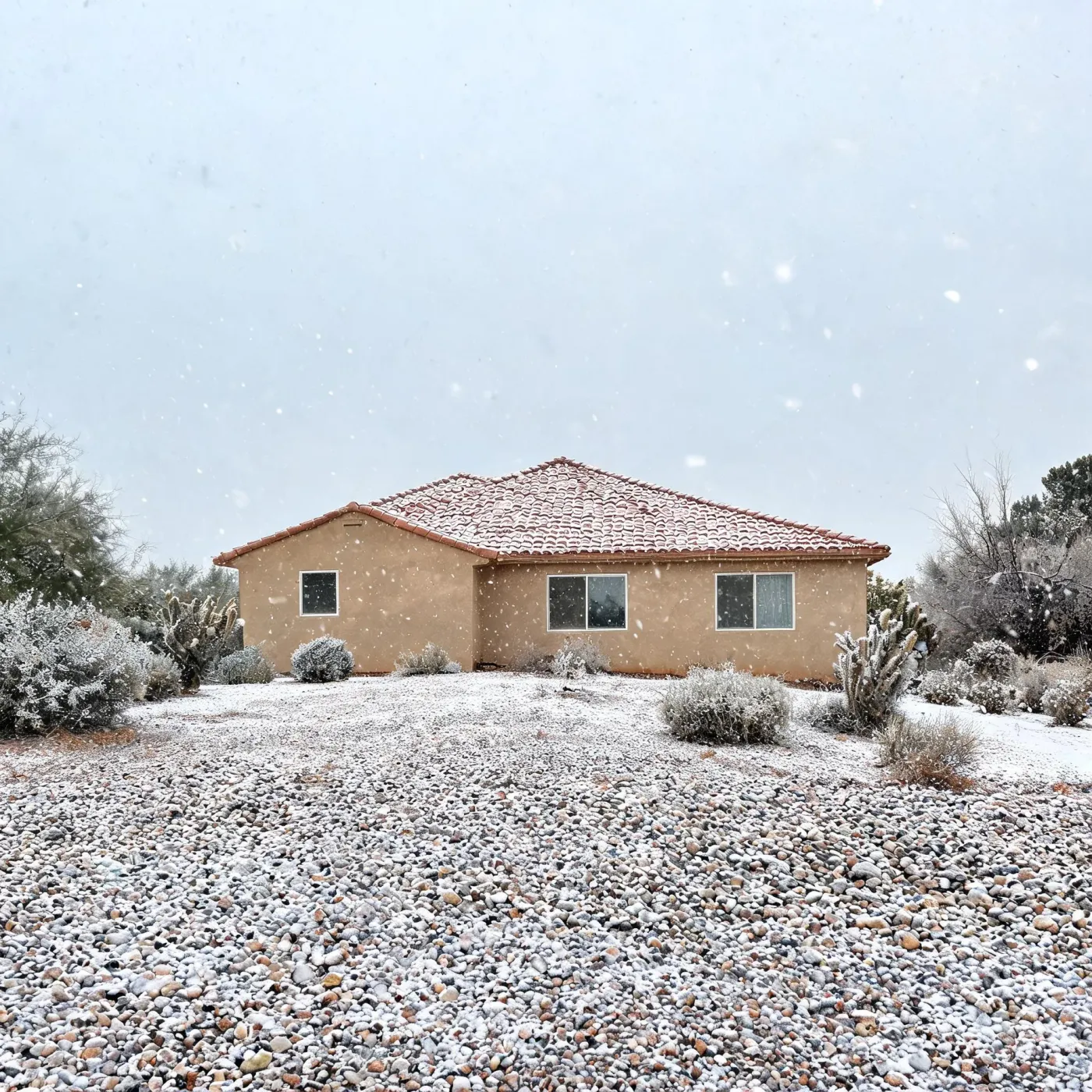
A single-story tan stucco house with a red tile roof during falling snow, surrounded by light snow-dusted gravel, shrubs, and cholla cactus.

Statewide, winter nights average 33°F, according to NOAA. That's cold enough that the furnace is cycling on most nights from December through February, not just when a storm comes through. Every time it fires, the same amount of air has to travel the same duct runs it always has. A run that's crimped or too long for the room it feeds loses more heat on a 33°F night than it does on a milder one, so the gap between that room and the rest of the house gets wider right when you notice it most. The furnace itself can be running fine the whole time.

NOAA nClimDiv 1991-2020 county normals weighted by homes

One room cold while the rest of the house is fine almost always comes down to a duct or a damper, not the furnace itself. A run that's too long, crushed, or disconnected behind a wall will starve that room no matter how well the furnace fires. A damper bumped or corroded in the wrong position does the same thing. Either way, the furnace is working, the thermostat is reading right, and the problem is sitting somewhere between the plenum and that one vent. Finding it means getting into the ductwork, checking the run, and testing the dampers, work that takes someone who knows where to look. Once you send the form, that search isn't yours to carry anymore. You hand it off, a contractor who covers your part of Nevada gets matched to the job, and they reach out to sort out what's actually happening behind that wall. The space heater can stay unplugged after that.

A dark standing-seam metal roof on a stucco house in the foreground, with desert scrub, a tall saguaro cactus, and red rock mesas and hills under a partly cloudy sky in the background.

Get the right pro for your furnace

Hand off the search

No charge to send it. You decide if you hire them.

A space heater running in one room all winter costs more on top of a furnace that's already cycling most nights in the 30s. A contractor can find the duct or damper causing it in one visit, and that room holds heat on its own after that.