A clean flame sensor
The burners light and stay lit. The furnace runs its full cycle without short cycling or shutting off partway through. You set the thermostat and the house warms up on schedule, no retries, no flashing code on the control board.

Your furnace flame sensor can get a thin layer of buildup on it over time, and once that happens the furnace may run for a few seconds and shut off, or refuse to light at all. You're trying to figure out how often that part actually needs attention so it doesn't catch you by surprise once the weather turns.
A flame sensor should get cleaned once a year, and the right time is before you start running your furnace regularly. The sensor sits in the burner flame and tells the furnace that gas is actually igniting. Over months of use it picks up a coating of carbon and oxidation, and once that coating builds up enough, the sensor stops reading the flame correctly and shuts the burner down as a safety measure. In Nevada that means a furnace that was fine last winter can start short cycling or tripping out the next time you turn it on, especially after sitting unused most of the year. A once-a-year cleaning, done as part of a fall furnace check, catches it before it turns into no heat on a cold night.

The burners light and stay lit. The furnace runs its full cycle without short cycling or shutting off partway through. You set the thermostat and the house warms up on schedule, no retries, no flashing code on the control board.

The igniter glows, the burners catch, then the flame goes out again a few seconds later. The furnace tries again, sometimes several times, before it locks out. On a cold night that means the blower keeps running while no heat comes through the vents.


The flame sensor is a small rod mounted near the burners, and its only job is to prove to the control board that gas is actually burning. When the igniter lights the burners, the sensor has a few seconds to pick up the flame's signal. If it doesn't, the board shuts the gas valve. That's the system protecting you, not malfunctioning. The trouble is the rod itself. Over a winter of running, it picks up a thin coat of carbon that blocks it from reading the flame it's sitting right next to. The flame can be burning clean and steady, and the sensor still won't see it. A technician clears that coating off with fine sandpaper or steel wool. A wire brush is too rough and leaves scratches that give the next layer of buildup more to grip onto. Since Nevada furnaces run for months at a stretch through the winter, this isn't something that happens overnight. It's a slow coating that builds up over the season, which is why checking the sensor before winter starts is worth doing rather than waiting for the furnace to stall out mid-cycle.




Only one pro gets your request, so you hear from one company.
It costs nothing to send, and you don't have to hire anyone.

This is what a flame sensor doing its job looks like. Gas burns steady, the burners stay lit, and the heat moves up through the ductwork without a hitch. No short cycles, no cold spots creeping in while the furnace tries and fails to hold a flame.

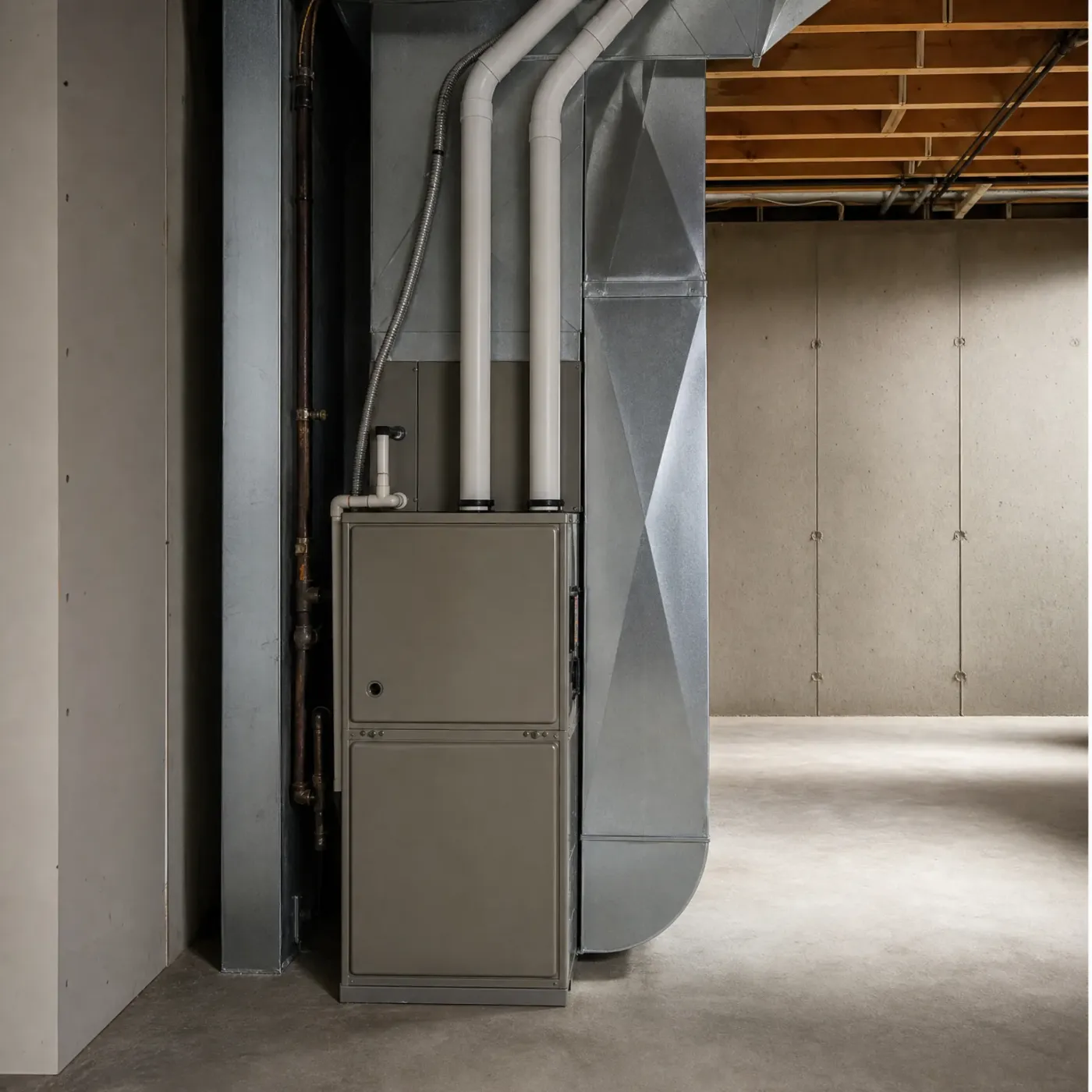
Same furnace, same basement, but a dirty sensor means the burners light and drop out again and again. Each panel and connection you see here is a place a contractor checks when the sensor itself isn't the whole story, since gas pipes and wiring can mimic the same symptom.
Furnace calls for heat and the igniter glows hot enough to light gas.
Gas flows to the burners and the flame spreads across them.
The flame sensor sits in that flame and heats up with it.
A clean sensor passes a weak electric signal back to the control board.
Nights here average 33°F across December, January and February, so your furnace isn't idling, it's cycling on and off most of the night to hold the house steady. Every one of those cycles puts the flame sensor back in front of the burners, and that's where the buildup comes from.
NOAA nClimDiv 1991-2020 county normals weighted by homes
A furnace flame sensor in Nevada needs cleaning about once a year, and checking it before the cold nights settle in keeps the furnace from quitting on you in the middle of winter. That's really the whole answer. The buildup is slow, the fix is quick for someone who knows where to look, and the burners either light clean or they don't. If your furnace has started hesitating or shutting off partway through a cycle, that's the sensor telling you where it stands. A local contractor who works on furnaces all winter has seen this part fail in a dozen different homes and knows what a few seconds of flame current should look like versus what a dirty sensor gives back. You'd be working with one contractor on this, not fielding calls from several, and that's someone who can get to the sensor, clean it, and have the furnace holding its cycle again before the next cold snap.
Your request stays with one local pro.
No charge to send it. You decide if you hire them.