

What size furnace a Nevada home needs

Skip collecting and comparing quotes for the new furnace.

Start one form

What size furnace do I need for my house in Nevada?

You want a furnace that keeps the house warm on the coldest nights without cycling on and off all the time or running up the gas bill. The right size depends on your house, not a rule of thumb you saw online. Since most homes here heat with gas, getting the size right matters for how evenly the house heats and how long the furnace lasts.

It comes from a heat loss calculation, not your square footage

A contractor sizes your furnace by figuring out how fast your house loses heat on a cold night, using your square footage, your insulation, your windows, and your ceiling height together. Two houses the same size can need different furnaces if one has more windows or less insulation. An undersized furnace runs constantly and never quite catches up on the coldest mornings. An oversized one heats the house fast, shuts off, and starts again soon after, which wears out its parts faster and leaves rooms uneven. Nevada winters are mild enough that most homes here don't need a huge furnace, but the only way to know your number is to have someone measure your house, not guess from its size alone.

A gray gas furnace stands on a concrete basement floor, connected to sheet-metal ductwork, white PVC vent pipes, and a yellow gas line, with plastic sheeting covering the walls.

Furnace sized right

A furnace that matches your house runs long, steady cycles and holds the temperature you set. The air coming out of the vents feels warm but not blasting. It shuts off on its own once the house is warm, and you don't hear it kick on again ten minutes later.


A metal furnace with louvered panels stands against a concrete basement wall, connected to sheet-metal ductwork and a round flue pipe, with wooden framing posts and a pipe nearby.

Furnace sized wrong

An oversized furnace heats the house fast, shuts off, then starts again soon after, because it never ran long enough to warm things evenly. An undersized one runs almost constantly on cold nights and still can't get every room to the temperature you set.

A woman in a knitted shawl sits in a living room with a fireplace, shelves, a sofa with cushions, and a lamp by a bright window, looking off to the side.
A woman with long brown wavy hair in a green shirt over a white top stands in a living room with built-in white shelves, a ceiling fan, a potted plant and a sliding glass door.
A woman with shoulder-length gray-streaked hair in a light gray knit sweater stands smiling and looking off to the side in a living room with a sofa, houseplant, framed picture, and sunlit sliding glass door.
A woman with shoulder-length curly gray hair wearing a gray knit sweater stands near a window with a sheer curtain, looking to the side, with a blurred interior room behind her.

Why square footage alone falls short

Two houses the same size can need different furnaces. A house with more windows facing west loses more heat than one with fewer, and a house with a vaulted ceiling has more air to warm than one with flat ceilings throughout. Insulation level changes the number too, and so does how much of the ductwork runs through an attic or crawl space instead of conditioned rooms. A contractor sizing your furnace walks through these details room by room. That's a load calculation, and it's the only way to land on the right number instead of a guess rounded up for safety.

What an oversized furnace costs you

A furnace too big for the house heats the air fast, hits the thermostat setting, and shuts off before it's warmed the walls, floors and furniture evenly. That's called short cycling. Rooms far from the thermostat stay cooler than the room it's in, and the burner and blower wear out faster from starting and stopping so often. Since gas heats most homes here and power is cheap, the bigger cost of oversizing shows up in equipment wear and uneven rooms rather than a high electric bill. A furnace sized to the house runs longer cycles and heats every room the same.

A woman and a sleeping child wrapped together in a cream knitted blanket on a couch, with a potted plant, framed photo and lit lamp in the background.
A gray-haired woman in a cream knit sweater stands in a dimly lit kitchen at night, looking to her right, with a round loaf of bread in the foreground and a dark window and potted plant behind her.

Skip calling around

One installer gets your project, so there's no bidding war over it.

You're not committing to anything by asking.

A furnace that's too big for your house will still heat it, but it does it in short bursts, and you'll notice the house swinging a few degrees warmer than you set it before the burner shuts off. Those short cycles wear out the parts that start the furnace, the igniter and the blower motor, faster than long steady runs would. A furnace that's too small runs almost constantly on the coldest nights, and you'll feel it: a room on the far end of the house stays a few degrees cooler than the one near the thermostat, no matter how long the furnace runs. Either way, the gas bill reflects it, since a furnace working against its own size uses more gas to deliver less comfort. The right size avoids both. It also matters for safety. A furnace too large for the ductwork can crack its heat exchanger over years of stress from short cycling, which is the kind of failure that calls for a new furnace, not a repair.

A gray high-efficiency furnace in a basement with sheet-metal ductwork, white PVC vent pipes, metal plumbing lines, a condensate pump on the floor, and a window showing green trees outside.
A furnace sized to the house heats evenly, run after run, without strain on the parts that start it up.
An older metal furnace with PVC and metal pipes stands on a concrete basement floor beside galvanized ductwork, with wooden stairs and a water tank in the background.
An old, overworked furnace sits caked in dust, a sign it's been running harder and longer than a right-sized unit would need to.

Is your furnace fighting your house to keep up?

Walk through your house on a cold morning and check the rooms. If the bedrooms at the far end stay cold while the room near the thermostat feels fine, the furnace isn't reaching the whole house evenly. Listen to it too. A furnace that's undersized runs almost nonstop on the coldest nights and still can't hold the temperature you set. One that's oversized does the opposite: it blasts hot air, shuts off fast, then kicks back on again within minutes. Either way, your gas bill climbs, and the furnace itself takes the wear. Parts built to start a few times a day are instead starting a dozen, and that catches up with them well before a right-sized furnace would show the same strain.

A gray metal furnace with louvered vent panels stands on a concrete basement floor beside galvanized ductwork, gas and plastic pipes, and foil-faced insulation along the ceiling and wall.
Before you get your furnace installation
A basement utility area with a gray furnace, sheet-metal ductwork, pipes, plastic-covered walls, a concrete floor, and a black shelving unit holding storage bins.
After you get your furnace installation
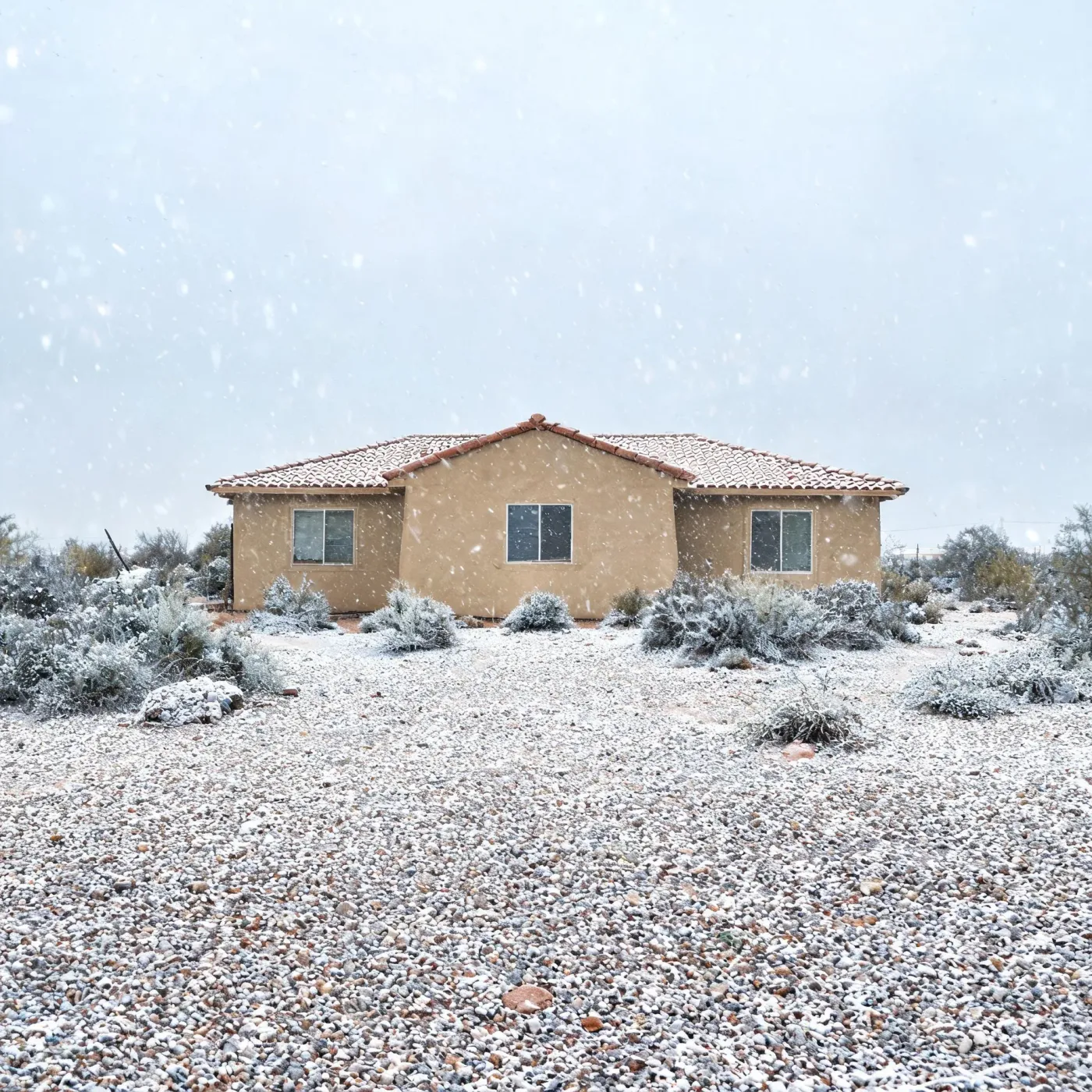
A single-story tan stucco house with a tile roof stands behind snow-dusted desert shrubs and a gravel yard during falling snow.

Winter nights across Nevada average 33°F, cold enough that your furnace is doing real work most nights, not just taking the edge off. On a size that matches your house, it runs a long, steady cycle to get through that stretch and holds the temperature until morning. If it's undersized, it never quite catches up and the house drifts cooler as the night goes on. If it's oversized, it blasts the air warm fast, shuts off early, and leaves the house to cool back down before it fires again. Either way you feel it in the bedrooms first, since that's where the swing shows up before anywhere else.

Source: NOAA state climate normals.

NOAA nClimDiv 1991-2020 county normals weighted by homes

A closed silver laptop and a ceramic mug of dark coffee sit on a wooden table in front of two chair backs, with a kitchen counter, tiled backsplash, wooden cutting boards, a vase of greenery and a potted plant by a window behind.

The right size comes from a load calculation, not a guess

A furnace sized to your house runs long, even cycles, warms every room the same, and doesn't wear itself out doing it. That's the whole answer. Getting there means someone walking your house, checking the windows and the ceilings and the layout, and running the numbers instead of matching a figure off a chart.

That's the part most people end up putting off, because it means tracking down a few contractors, explaining the same thing to each one, waiting on quotes, and trying to tell apart whose number actually reflects your house. A local installer who sizes furnaces for homes like yours all winter can tell you what's driving the load the first time they walk through. You'd be working with one contractor on this, not fielding calls from several trying to win the job.

Interior corner of a room with a window and sheer curtain at left, a gray upholstered sofa with a cushion at right, and a round wooden table holding stacked books and a round vase with an olive branch.
At dusk, a dark board-and-batten house with a standing-seam metal roof and lit entry walkway of stone pavers, with two large outdoor heat pump units on a stone-walled pad at right and trees and hills in the background.

Furnace Installation

Describe it once

Step 1 of 3: Equipment
  • A cream chunky cable-knit throw draped over a beige upholstered armchair beside a bright window, with a wooden side table holding a book and a vase of leafy branches at left.
    • A local installer who puts in furnaces gets your project.
    • Get in touch with a local installer about a new furnace.
  • Living room corner with a gray sofa holding beige pillows and a knit throw, a round wooden coffee table with a dark planter and shallow bowl, a jute rug, a floor lamp, a framed landscape print on the wall, and a window showing trees.
    • Send the form and the search for an installer is over.
    • Send the form and stop researching installers for the new furnace.
  • A living room corner with a cream sofa and cushion, knit throw, wooden coffee table holding a shallow bowl and dark ceramic vase with green foliage, a floor lamp, potted plant in a woven basket, and linen curtains at a window.
    • One form replaces the calls you'd make to find a furnace pro.
    • Skip the round of in-home estimates for a new furnace.
  • A round reclaimed-wood coffee table with a black metal base sits on a woven rug in front of a cream sofa with cushions, with a lit built-in fireplace and a tall indoor tree in the background.
    • The pro who reaches out is licensed in Nevada.
    • Only one pro gets your request, so you hear from one company.