Profile view of a bearded man wearing a dark green baseball cap and a dark gray T-shirt against a plain light background.

What a furnace tune-up covers before a Nevada winter

Step 1 of 3: Equipment

A furnace tune-up before winter checks the parts that let a gas furnace start and burn safely after sitting idle since last spring. The technician checks the igniter, cleans or tests the flame sensor, and looks at the burners for dirt or uneven flame. They check the heat exchanger for cracks, since a cracked one can leak exhaust into your air instead of venting it outside. They test the blower motor, check airflow, and change or check the filter. They also check gas pressure and the thermostat connection to make sure the furnace responds the way it should. Nevada homes run the AC hard all summer and the furnace sits unused for months, so parts that were fine in April can fail the first cold night in November. A tune-up catches a weak igniter or a dirty flame sensor while it's a small fix, before it leaves you without heat on a cold morning.

A man in a blue T-shirt sits on a light gray sofa, laughing while looking at an open laptop in the foreground, with a framed picture, lamp and potted plant behind him.
A bearded man in a blue and brown plaid flannel shirt stands indoors looking out a window at snow-covered trees, with a ceramic mug on the windowsill.

Why the flame sensor matters

The flame sensor tells the furnace a flame is actually burning. A furnace that sat unused since spring often has a sensor coated with a thin layer of oxidation, and a coated sensor can't read the flame right. When that happens, the furnace shuts itself off, sometimes a few seconds after it fires, sometimes before it fires at all. Cleaning that sensor is a small job, but it's the difference between a furnace that runs through a cold night in Nevada and one that keeps tripping off and leaving the house to cool.


What a cracked heat exchanger means

The heat exchanger is the metal chamber that separates the burning gas from the air blown into your house. A crack in it lets combustion gas mix with that air instead of venting outside. It's one of the few things on a furnace that isn't a simple part swap, since the exchanger has to be inspected directly, not guessed at. A furnace that sat idle all summer is exactly the kind that hasn't been checked since the crack, if there is one, might have started. That's why it gets looked at before the first cold night, not after.

A beige gas furnace in a basement with a metal flue pipe, galvanized sheet-metal ductwork to its left, and gas and water pipes along the concrete wall to its right.
Before you get your furnace maintenance
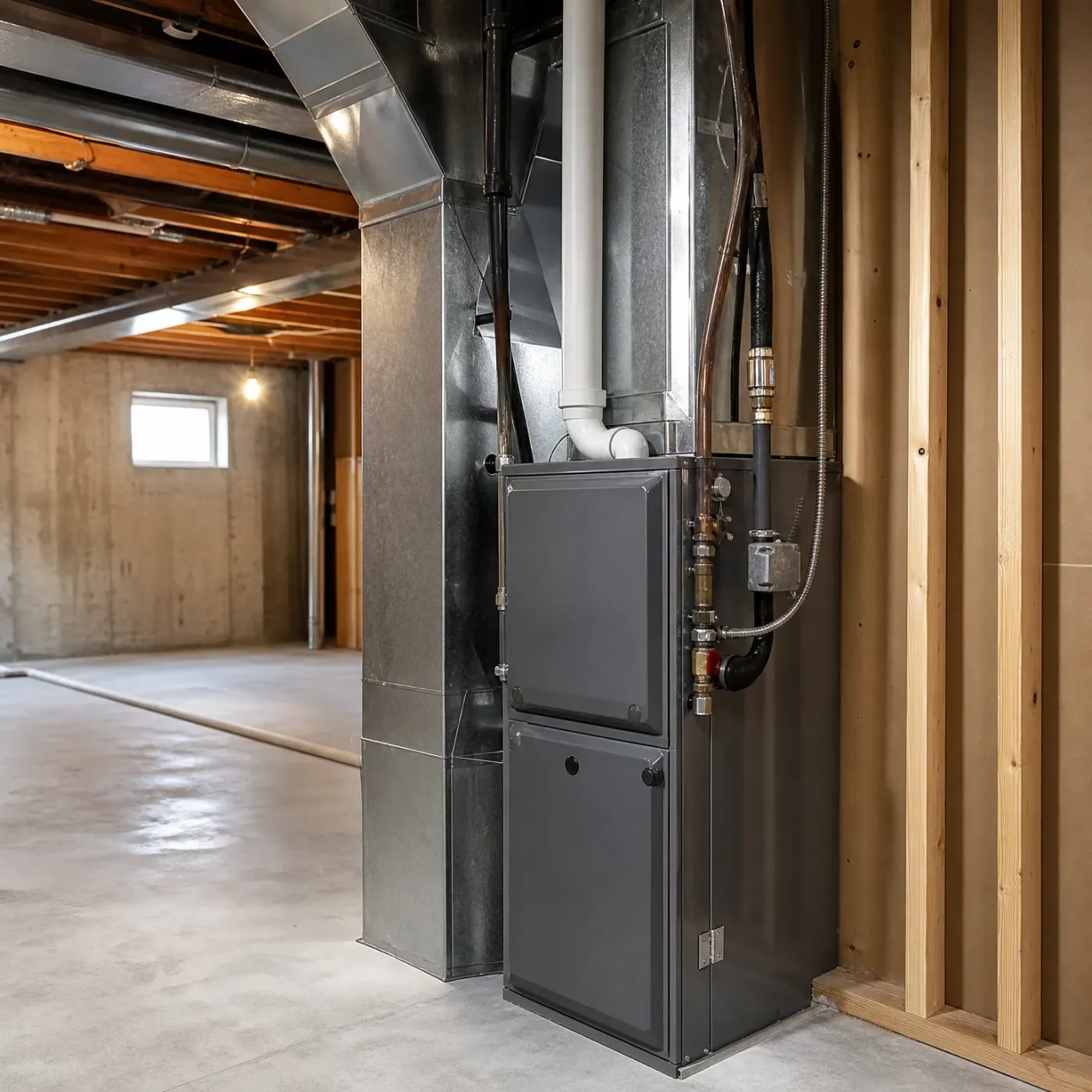
A gray high-efficiency furnace with white PVC vent pipes stands on a concrete pad in a basement, beside sheet-metal ductwork, copper piping and a poured concrete wall with wood framing at left.
After you get your furnace maintenance

What skipping it looks like at home

Your furnace sat idle all summer while the AC ran. If nobody checks it before the weather turns, the first sign of trouble shows up as a furnace that won't light on the cold morning you need it most, or one that lights and then shuts off a few minutes later. That shutdown is usually the flame sensor refusing to confirm a flame it can't read clearly anymore. Some furnaces just blow cold air until the igniter gets cleared. None of this is dramatic, but it means a call placed on a cold night instead of a problem caught and cleared ahead of time.

Why catching it now is worth more

Power is cheap in Nevada, so a furnace running a little harder than it should doesn't hit the bill the way it might elsewhere. The real cost shows up in reliability. A furnace with a dirty flame sensor or uneven burners can still run for weeks before it finally won't start at all, usually on a night you least want to be without heat. A tune-up now means a technician who works on these furnaces all season finds the sensor or igniter issue while it's a five-minute fix, not a no-heat call during the first cold snap.

A smiling man in a navy long-sleeve shirt sits at a wooden table in a kitchen and dining area, with a ceramic mug, a potted plant, and a sliding glass door behind him.
A smiling bearded man in a green henley shirt stands at a kitchen island with a gray mug, looking off to the side, with a dining area and shelves blurred behind him.
A smiling bearded man in a navy sweater sits at a white kitchen island with a ceramic mug, with open shelves, potted plants and a range hood behind him.
A smiling man in a dark olive long-sleeve shirt sits in a kitchen beside a counter with a dark mug, with a dining table, sideboard and hallway visible in the blurred background.
A gray furnace with copper and flexible piping stands against a wood-framed wall in an unfinished basement, connected to galvanized sheet-metal ductwork and PVC venting, with a concrete floor and exposed joists.

Stop chasing a furnace pro

A licensed local pro takes the request for your furnace tune-up.

After this form, you can stop searching for a furnace pro.

Find a licensed furnace pro

It costs nothing to send, and you don't have to hire anyone.

A gray high-efficiency furnace stands on a concrete basement floor beside sheet-metal ductwork, with white PVC vent pipes and a black flexible line running up to exposed wood floor joists, next to a wood-framed post against a concrete wall.
A furnace that got checked before winter lights on the first try and burns clean, with the igniter and burners already tested while the ductwork sits ready to carry heat.
A beige metal furnace with a louvered front panel stands on a concrete floor against a concrete wall, connected to galvanized sheet-metal ductwork and a metal pipe.
A furnace left alone since spring runs on gas lines and a flue nobody's looked at, and whatever's gone wrong with the igniter or burners shows up on the coldest morning.
  1. The technician shuts off gas and power before opening the cabinet.

  2. The igniter gets tested for a steady, strong glow.

  3. The flame sensor is cleaned of oxidation buildup.

  4. Burners are inspected and cleaned for an even flame.

Tune-up done vs furnace untouched

Tune-up done

  • The igniter was tested under power and draws the current it should to glow hot enough to light the burners.
  • The flame sensor was cleaned, so it reads the flame right instead of shutting the burners off a few seconds after they light.
  • The burners were inspected and cleaned, so they burn an even blue flame instead of a yellow or uneven one.
  • Gas pressure and connections were checked before the furnace ran its first full cycle of the season.
  • A technician who works on furnaces all winter in Nevada has already seen what usually fails first and looked at it directly.
  • Any part close to failing got flagged before it left you without heat on a cold night.

Furnace untouched

  • The igniter has not been tested since spring and may not glow hot enough to light the burners on the first try.
  • A flame sensor coated with oxidation from a summer of sitting idle can misread the flame and shut the furnace down.
  • Burners that picked up dust over the summer may burn unevenly without anyone noticing until the furnace is already running.
  • Gas pressure and connections haven't been checked, so a developing problem stays hidden until the furnace is relied on for heat.
  • Nobody familiar with this specific furnace has looked at it, so a small issue has no chance to get caught early.
  • The first sign of a problem shows up as a furnace that won't light, or won't stay lit, on the morning you need it.
A gray high-efficiency furnace in a basement with PVC vent pipes, sheet-metal ductwork, copper and insulated pipes, a water heater at left, and an unfinished wood-stud wall at right.

Furnace running clean

This is a furnace that got looked at. The flue pipes are tight, the ductwork is intact, and the burners light without hesitation. Nothing here surprises the technician who serviced it, because he already knows what's behind the cabinet door.

An older beige furnace with louvered front panels stands on a concrete basement floor beside galvanized ductwork, metal and plastic pipes, exposed wood framing, and a cylindrical water heater at right.

Furnace nobody's checked

This furnace has sat through a Nevada summer with nobody near it. The galvanized ductwork and flue pipes are original to the house, and whatever's built up inside the burners or on the flame sensor is still there. It'll run, until the morning it doesn't.

Winter nights average 33°F statewide

Nevada nights average 33°F through December, January and February. That's cold enough that your furnace is running most nights, not just on the rare cold snap. A furnace that's starting every night needs its igniter and burners working right from the first cold evening.

NOAA nClimDiv 1991-2020 county normals weighted by homes

Where your furnace stands now

  • A tune-up checks the igniter, flame sensor, and burners so your furnace starts clean on the first cold night.
  • Nevada nights sit around 33°F through December, January and February, and your furnace will run most of those nights.
  • The work happens once, before the parts that failed last spring get a chance to fail again this winter.
  • A local contractor who services this equipment all season knows which parts in Nevada furnaces tend to go first.
  • One contractor takes the job, so you're not fielding calls from several companies about the same furnace.
  • Catching a coated flame sensor or a weak igniter now means it doesn't show up as a furnace that won't light in January.

A tune-up before winter comes down to a few parts that either work or don't: the igniter, the flame sensor, the burners. Checking them now means you find out on a technician's schedule, not on a 33°F night in January when the furnace won't light.

The contractor who takes this job works on furnaces all season, in homes around you that heat the same way yours does. He's not guessing at what usually fails in a Nevada furnace that sat idle all summer. He's seen the coated sensor and the weak igniter before, more than once this year alone, and he knows what to check first because of it.

It's one contractor, not a handful calling you back about the same job. You explain your furnace once, to someone who's already thinking about what's likely wrong before he opens the cabinet.

None of this requires anything from you beyond the one visit. The furnace either starts clean and burns even, or it has a part that needs attention now instead of mid-winter. Either way, you know where you stand before the cold sets in for good, and you're not finding out the hard way on the first night you actually need the heat.

A dark wood cabinet with a drawer and black knob holds a ceramic vase of green leafy branches and a wooden bowl, beside a window with a woven basket of knit blankets.
Sunlit interior corner with white baseboard molding, cream walls, a wood floor, a woven jute rug, and a potted green plant on a window sill with trees visible outside.
Sunlight falls across a marble countertop by a window, where a small stone bowl with pebbles sits beside a potted pothos plant in a ceramic planter and a folded beige towel.
Exterior corner of a house with lap and shingle-style siding, a white gutter and downspout with offset elbows, a stone veneer base, a window at right, and flowering hydrangea shrubs at lower left in warm low-angle light.
A wooden console cabinet with a caned front holds a ceramic vase of green leafy branches and a shallow wooden bowl, below a framed landscape print on a beige wall beside a curtained window.

Send one request and you're done looking

Only one pro gets your request, so you hear from one company.

Get one local pro

No charge to send it. You decide if you hire them.