A dark gray furnace with two access panels stands in a basement, connected to galvanized sheet-metal ductwork and PVC pipes, with exposed wood framing and a bare bulb light in the background.

A pro who works on furnaces

Signs of a cracked heat exchanger in Nevada

A cracked heat exchanger is a real safety question, not just a repair bill. Running your gas furnace all winter on a cracked exchanger can let exhaust mix into the air it's heating. This page covers what to look and smell for, and how to get a furnace checked out fast by someone who serves your part of Nevada.

Match me with a pro

A cracked heat exchanger usually shows up as a smell, not a noise. Soot or a sharp, formaldehyde-like odor when the furnace runs, a flame that flickers or turns yellow instead of staying steady blue, and a headache or nausea that fades when you leave the house are the signs worth acting on. It happens because the metal box carrying exhaust heats and cools every time your furnace cycles on and off, and over many winters that flexing opens a seam. Once it cracks, carbon monoxide can leak into the air your furnace is blowing through the house instead of going out the flue. Gas furnaces here run most of the winter, so that cycling adds up faster than it would on a furnace that barely gets used. If you notice any of these signs, or your carbon monoxide detector goes off, turn the furnace off and have it looked at before running it again.

A smiling man in a dark navy sweater sits on a light sofa in a living room, with a glass bowl of popcorn on a wooden coffee table and bookshelves behind him.
A smiling man in a dark green sweater sits on a tan leather sofa in a dimly lit living room, with a bowl of popcorn in the foreground and a kitchen area blurred behind him.
A smiling middle-aged man in a dark shirt sits on a gray sofa in a living room, with a bowl of popcorn on a side table and shelves, a window and kitchen area behind him.
A smiling bearded man in a dark gray t-shirt sits on a gray couch in a living room, with a large glass bowl of popcorn on a wooden table in the foreground.
A gray high-efficiency furnace with white PVC vent pipes stands beside sheet-metal ductwork and a water heater in an unfinished basement with concrete walls and wood framing.
A furnace running the way it should: steady blue flame, clean ductwork, nothing to smell when it kicks on.
A beige gas furnace with a metal flue pipe stands in a basement against concrete block walls, beside sheet-metal ductwork, copper and white plastic pipes, and a water heater at right.
A furnace worth having checked: an older unit where rust or scale on the cabinet hints at wear you can't see inside the exchanger.
A dark interior hallway with a dim window at the end, a wooden floor, a stair railing on the right, and a bench or rug in the foreground.

You're up before the alarm, out of habit more than need, and the hallway floor is cold under your feet. 2 a.m., and the vent by the bathroom door isn't ticking the way it does when the furnace is running. You stop and listen. Nothing. The window at the end of the hall has frost crawling up the inside edge, and the light coming through it is that flat blue that outdoor security lights throw off this time of year. No smell, no sound, just a house that's gone quiet when it should be working. You pull your sleeve over your hand and touch the vent anyway.


A woman in a cream cardigan and jeans stands with one hand raised facing an open front door of a gray horizontal-siding house, with a black lantern wall light, a potted shrub with yellow flowers, and a stone-faced porch column.

How a crack actually lets exhaust into your air

The heat exchanger is the metal chamber that holds the flame and exhaust gas, separate from the air moving through your ducts. A blower pushes house air across the outside of that chamber, and the chamber passes its heat through the metal into that air. The gas itself never touches the air you breathe, as long as the metal stays whole. A crack opens a path between the two sides, and the blower's pressure can pull exhaust through that gap and send it into the ductwork along with the heated air.

It usually starts small, at a seam or a stress point from years of heating and cooling, and it gets worse as the metal keeps flexing each time the furnace cycles on and off. A furnace can run for a while with a hairline crack before anyone notices anything. Once you've sent in what you've noticed, a licensed contractor who takes on furnace repair in your area will get in touch to look at the exchanger directly and tell you what the metal is actually doing.

A living room corner with a beige upholstered armchair holding navy and striped cushions, a small round wooden side table with a carved bowl and a potted green plant, a framed landscape picture on a pale wall, built-in shelving, and a curtained window.
A gray residential furnace with two panel doors stands against a plain light wall in a concrete-floored room, connected to metal ductwork and white and copper pipes.

Why age raises the odds

Metal fatigues from years of heating up and cooling down every time the furnace cycles on and off. Each cycle flexes the exchanger slightly, and after enough winters that flexing opens a seam, usually at a weld or a bend. A furnace that came with the house is worth a closer look for this reason alone. Nevada winters are short, so a furnace here fires less than one in a colder state, but the metal still ages on every cycle it runs.

A gray high-efficiency furnace with white PVC venting pipes stands against a plain wall in a basement, connected to sheet-metal ductwork on a concrete floor.

Why the smell reaches you at all

Dry air carries odor differently than humid air does, and Nevada homes run dry most of the year. That sharp smell from a cracked exchanger doesn't get absorbed by moisture in the air the way it might somewhere muggier. It can also mean the smell fades fast once a window opens or the furnace shuts off, so if you only notice it while the furnace is running, that timing itself is worth telling a technician.

What would you actually notice if yours had this

Most of it shows up when the furnace has been running a while, not right when it kicks on. A smell like hot metal or something faintly sour, strongest near a vent. Soot around the furnace cabinet or on the wall behind it. The flame through the little window looking yellow or jumping around instead of sitting steady. Some households notice headaches in the evening that clear up once everyone's in bed with the furnace off, or a pet that seems sluggish in the room the vents feed. None of these happens on its own, and you don't need all of them to have something worth checking. The risk isn't the furnace breaking down. It's exhaust gas moving into the air you're breathing all winter without you knowing it.

A woman with dark hair in a bun reclines on a sofa with her eyes closed, wrapped in a cream fleece blanket, a closed blue hardcover book resting in front of her, with a lit lamp and a vase of dried flowers in the background.
A smiling bearded man in a navy sweater sits at a candlelit dinner table with a glass of red wine, a bowl of salad, and plates of food in the foreground.
An unfinished basement with a concrete floor, pink insulation on one wall, exposed joists, galvanized sheet-metal ductwork, PVC vent pipes, and a tall gray furnace with attached gas and electrical lines.

Get your furnace to the right pro

Send the request today and stop worrying about who to call.

Tell a local repair pro what your furnace is doing.

Find my pro

There's no charge for the request.

An older beige furnace with two louvered vent panels stands on a concrete basement floor, connected to galvanized ductwork and a metal flue pipe, with gas piping and flexible conduit on the wall behind.
Before you get your furnace repair
A beige high-efficiency furnace in an unfinished basement, with white PVC vent pipes, a yellow gas line, metal ductwork, and exposed wood framing on a concrete floor.
After you get your furnace repair
  1. Flame heats the metal exchanger wall from the inside.

  2. Metal expands with each cycle and weakens at old seams.

  3. A crack opens at a weld or bend.

  4. Exhaust gas leaks into the air your blower moves.

Can a cracked heat exchanger make a carbon monoxide detector go off?

Your carbon monoxide detector went off while the furnace was running, and now you're wondering if that's the heat exchanger or a false alarm. It's a fair question. A detector going off is the one sign on this list that doesn't depend on your nose or your memory of a headache. It's a reading, not a guess, and it changes what you do next.

Yes, and it's the clearest sign on this list

A cracked heat exchanger lets exhaust gas mix into the air your blower moves through the house, and carbon monoxide is part of that exhaust. A working detector will pick it up. If it goes off while the furnace is running and goes quiet once the furnace shuts off or you air out the house, that pattern points straight at the furnace. Shut it off and don't run it again until it's been checked. A detector alarm is worth trusting over a smell you're not sure about, since it's measuring the air rather than relying on what you happen to notice. Low batteries or a detector near the end of its own life can also trigger false alarms, but gas furnace exhaust is the reason these detectors exist in homes that heat with gas.

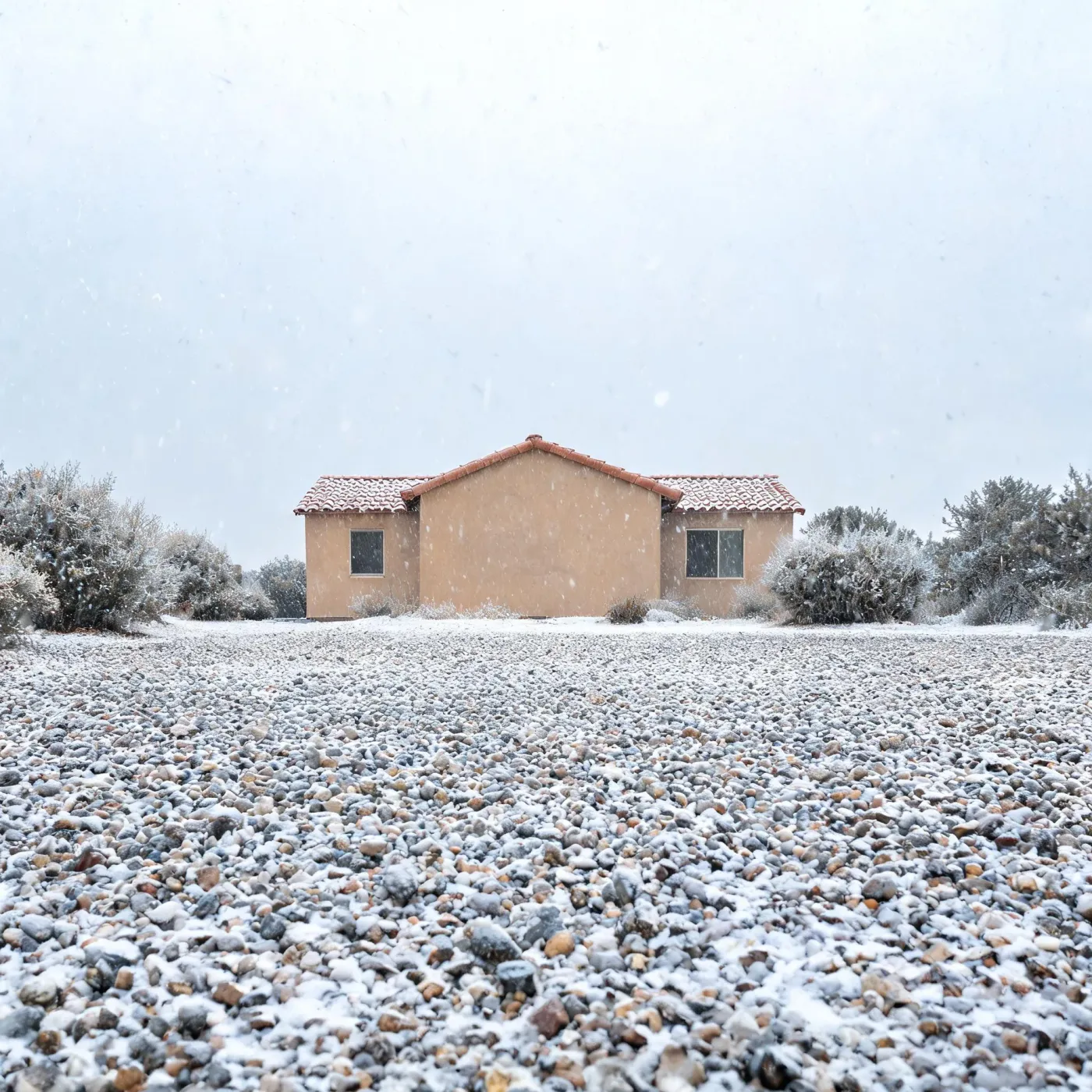
A single-story tan stucco house with a red tile roof stands behind a wide gravel yard dusted with snow, flanked by low shrubs, under a pale overcast sky with falling snowflakes.

Statewide, winter nights average 33°F, which means your furnace is running most hours it's dark out, not just on the cold snaps. That's a lot of cycles on the burner and the exchanger behind it. Every time the flame lights and the metal heats up, then cools again when the thermostat is satisfied, it flexes a little. Mild nights don't skip this, they just mean more cycles instead of fewer, since the furnace kicks on and off to hold the temperature rather than running flat out. At home, that's the furnace coming on every time the heat drops a few degrees, all night, for months. Source: NOAA climate normals.

NOAA nClimDiv 1991-2020 county normals weighted by homes

Get It Checked or Wait It Out

Have it checked

  • A tech can pressure-test the exchanger or run a combustion analyzer to measure carbon monoxide in the air stream directly.
  • A camera scoped into the exchanger can find a crack or split seam that you'd never see or smell from outside the cabinet.
  • If a crack is confirmed, the furnace can be shut down or the exchanger replaced before another night of exhaust mixing into the air.
  • A full inspection also catches rust, scale, or a cracked heat shield that's heading toward a crack but isn't one yet.
  • Most warranties on the exchanger itself only pay out if a licensed tech documents the failure, so a check is what makes that claim possible.

Wait and watch

  • A smell or a flickering flame can come and go with how long the furnace has run, so a quiet night doesn't mean the crack closed up.
  • Carbon monoxide has no smell or color, so waiting for a stronger sign means waiting for a symptom like a headache instead.
  • A crack doesn't heal. It widens a little more with each heating cycle as the metal flexes at the same weak seam.
  • Running the furnace while you decide means more hours of a blower pushing air across a chamber that isn't sealed.
  • Nevada's dry winter nights mean the furnace cycles often, so each day of waiting adds cycles that work the same crack.
A gray high-efficiency furnace in a basement, connected to sheet-metal ductwork on the left and white PVC vent pipes above, with black gas and drain piping and an exposed wood-stud wall with OSB sheathing on the right.

A furnace with nothing to hide

This is what a sound installation looks like. Clean ductwork, the gas line run straight, and a cabinet free of rust or soot. A furnace like this can still crack with age, but there's nothing here pointing to trouble yet.

An older gas furnace with two louvered front panels stands on a concrete basement floor beside galvanized sheet-metal ductwork, pipes, and a weathered concrete wall.

A furnace worth a second look

Older louvered panels, a concrete floor with moisture staining, copper and PVC lines running alongside a unit that's clearly seen some winters. None of that proves a cracked exchanger, but it's the setup where one turns up.

Winter nights average 33°F statewide

At 33°F, your furnace isn't just kicking on for a few cold snaps, it's running most nights from December through February. That's a lot of heat cycles on an aging exchanger, and each one is a chance for a worn seam to open further.

NOAA nClimDiv 1991-2020 county normals weighted by homes

What to do with what you've learned

  • A steady blue flame, no soot, and no odd smell when the furnace runs means nothing here points to a crack.
  • A yellow or flickering flame, soot near the cabinet, or a sharp smell when the furnace kicks on is worth a tech's look.
  • Headaches or nausea that ease once you leave the house are not something to watch and wait on.
  • An older furnace with rust or scale on the cabinet carries more risk even before any smell shows up.
  • A pressure test, combustion analyzer, or camera scope finds a crack that no amount of sniffing or listening will.
  • Once you send the form, finding the right tech is off your plate.

A cracked heat exchanger doesn't announce itself with a bang. It shows up as a smell, a flame that isn't the steady blue it should be, or a headache that lifts the moment you step outside. None of that is something to sit on through a Nevada winter when the furnace is running most nights from December through February. If what you've noticed matches the warning signs, the next move isn't to keep watching for more proof. It's to get someone out who can run a combustion analyzer or scope a camera into the exchanger and tell you, with instruments instead of guesswork, whether exhaust is getting into the air your blower moves through the house.

If what you checked matches the other list, the steady flame, the clean cabinet, nothing to smell, there's nothing here pushing you to act tonight. An older furnace is still worth a closer look eventually, even without symptoms yet, since rust or scale on the cabinet can be the first visible sign of wear that started on the inside.

Either way, the part that takes the longest is usually deciding who to call. Send the form and that part is done. A contractor who handles this kind of repair gets your information and reaches out, and from there it's a conversation about your furnace, not a search for the right person to have it.

A gray high-efficiency furnace with two access panels stands on a concrete basement floor, connected to sheet-metal ductwork and white PVC vent pipes, with wood framing and a gas line nearby.

The right pro for this job

Step 1 of 3: Equipment