Profile view of a bearded man wearing a dark baseball cap and a dark gray T-shirt against a plain off-white background.

Is a high-efficiency gas furnace worth it in Nevada

Step 1 of 3: Equipment

Is a high-efficiency gas furnace worth it in Nevada

Nevada winters don't run long, and your gas bill probably isn't the thing keeping you up at night. But a high-efficiency furnace costs more up front than a standard one, and you're trying to figure out if that difference actually pays you back here, or if it's money better spent somewhere else.

It depends on how many months you actually run it

A high-efficiency furnace burns less gas to make the same heat, usually by pulling more warmth out of the exhaust before it leaves the house. That difference shows up on your bill in direct proportion to how often the furnace runs. In most of Nevada, that's a handful of months, not seven or eight. Power here is cheap and most homes already heat with gas, so the fuel bill was never the biggest number on the statement to begin with. The upgrade still makes sense if your furnace is old enough to need replacing anyway, since you're paying for a new one regardless. It makes less sense as a reason by itself to replace a furnace that's still working fine.

A gray high-efficiency furnace in a basement with white PVC vent pipes, sheet-metal ductwork, copper and black piping, a condensate pump, and insulated walls above a concrete floor.

What a high-efficiency furnace is doing right

The PVC lines draw off the condensate a sealed-combustion furnace produces, and the pump moves it out when there's no floor drain nearby. A second heat exchanger is pulling more out of the gas you burn before it vents outside.

A beige residential furnace stands on a concrete basement floor beside galvanized sheet-metal ductwork, a round flue pipe, copper gas piping, and a PVC condensate line, with a wood-paneled wall at right.

What an aging standard furnace is telling you

That round metal flue and the grime on the panels point to a furnace that vents hot exhaust straight up the chimney instead of condensing it. If it's old enough to sit next to a stone chimney like that, it's worth finding out how many winters it has left.

A gray furnace with two access panels stands on a concrete basement floor beside sheet-metal ductwork, with pipes, flexible conduit and an electrical box on the concrete wall to the left.
Before you get your furnace installation
A gray high-efficiency furnace stands on a concrete basement floor beside galvanized sheet-metal ductwork, white PVC vent pipes, copper and black piping, and unfinished wood stud framing.
After you get your furnace installation

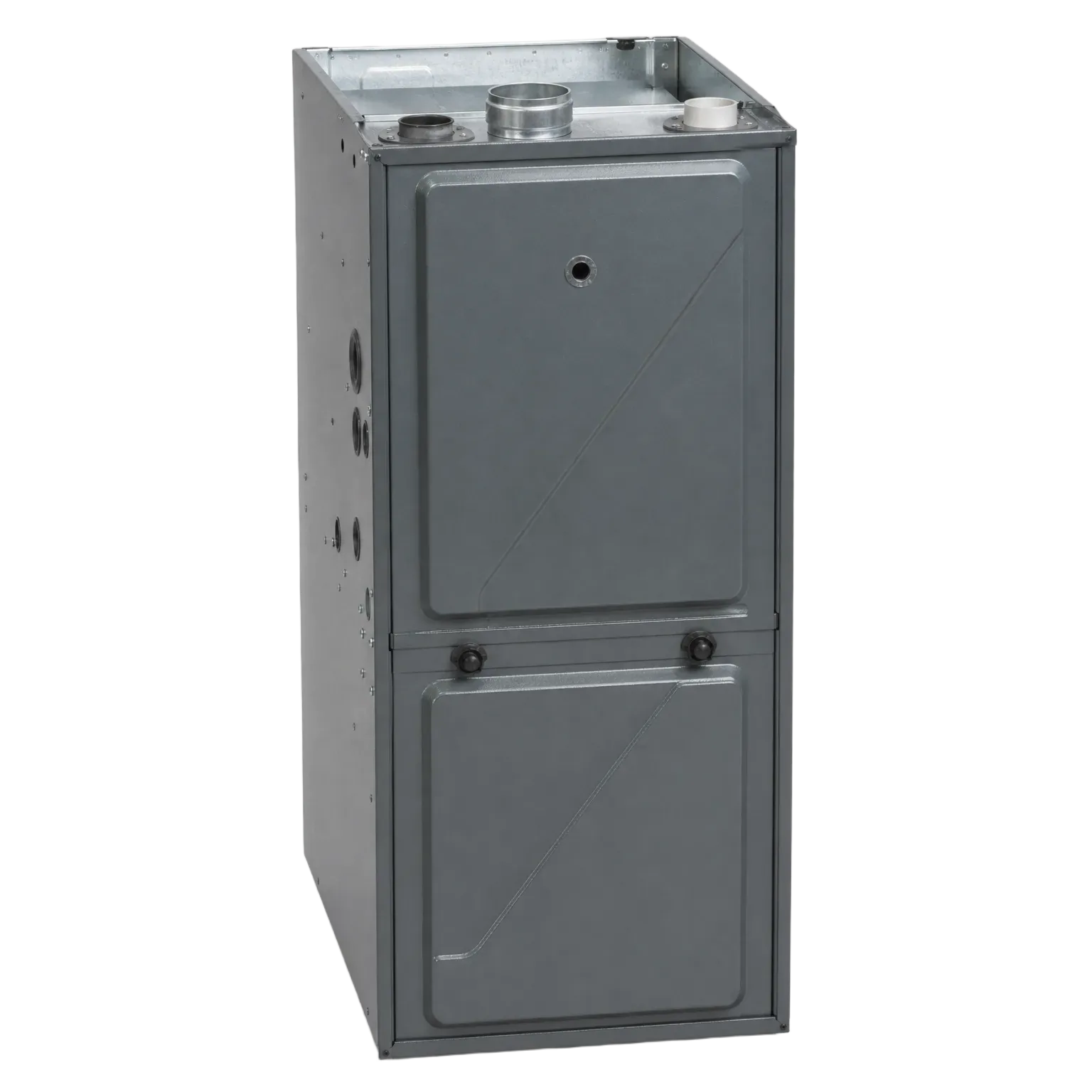
A standard furnace sends its exhaust up a metal flue because that exhaust is still hot enough to rise by itself. A high-efficiency furnace runs the exhaust through a second heat exchanger first, pulling most of the heat out of it before it leaves the house. That exhaust comes out too cool to rise on its own, so an inducer motor has to push it out through PVC pipe instead of metal. Cooling the exhaust that much also drops it below the point where water condenses out of it, which is why these furnaces need a condensate drain or a pump to get rid of that water. The igniter is almost always a hot surface igniter rather than the standing pilot or spark igniter you'd find on an older unit. Combustion air comes in through its own PVC pipe from outside rather than getting pulled from the room the furnace sits in. Because the burn is sealed off from the house air, the furnace isn't competing with your range hood or a bathroom fan when they're running.

How a sealed furnace burns gas

  • A standard furnace vents through metal flue pipe because its exhaust stays hot enough to rise on its own.
  • A high-efficiency furnace cools the exhaust so much in that second heat exchanger that it has to be pushed out through PVC pipe by an inducer motor instead.
  • That cooled exhaust drops below the point where water condenses out of it, which is why the unit needs a condensate drain or pump at all.
  • The igniter in a high-efficiency furnace is almost always hot surface, not the standing pilot or spark igniter you'll find on older standard units.
  • Combustion air comes in through its own PVC pipe from outside rather than being pulled from the room around the furnace.
  • Because the burn is sealed off from the house air, a high-efficiency furnace doesn't compete with your kitchen range hood or a bathroom fan for air to burn.
A man in a navy sweater reclines with closed eyes in a beige armchair in a living room, with a lamp, wooden cabinet, bookshelf, potted plant, and a side table holding a newspaper and mug nearby.
A man in a blue henley shirt reclines on a leather chair with his eyes closed, beside a window, a houseplant, a side table with a newspaper and a dark mug.
A man in a gray sweatshirt reclines with his eyes closed in a dark leather chair, with a bookshelf behind him and a side table holding folded newspapers, a mug, and a potted plant by a window.
A man in a blue sweater leans back on a brown leather chair with his eyes closed and a slight smile, in a room with bookshelves, framed pictures, a potted plant by a window, a folded newspaper and a dark mug on a table.

Why the math is different here

Nevada winters are short, so a furnace that burns less gas per therm doesn't get to prove itself over many months the way it would somewhere colder. Power here is cheap too, which takes some of the pressure off looking for savings elsewhere. The payback on the extra cost of a high-efficiency unit stretches out when it's only running a handful of months a year. That doesn't make it a bad furnace, it just means the case for one in Nevada rests on something other than the gas bill.

What you're actually paying for

A high-efficiency furnace runs quieter and holds a steadier temperature room to room, because the variable-speed blower most of them use ramps up and down instead of switching on at full blast. The sealed combustion also means it isn't pulling air from inside your house to burn, which matters more in a tightly built home. If you're after comfort and a longer-lasting furnace rather than a lower gas bill, that's where the value shows up.

Winter nights average 33°F statewide

A 33°F night means your furnace is cycling on and off, not running flat out for hours. That's a light load for a gas furnace, standard or high-efficiency, and it's part of why the gap between the two shows up smaller on a Nevada gas bill than it would somewhere the thermometer sits near freezing all day.

NOAA nClimDiv 1991-2020 county normals weighted by homes

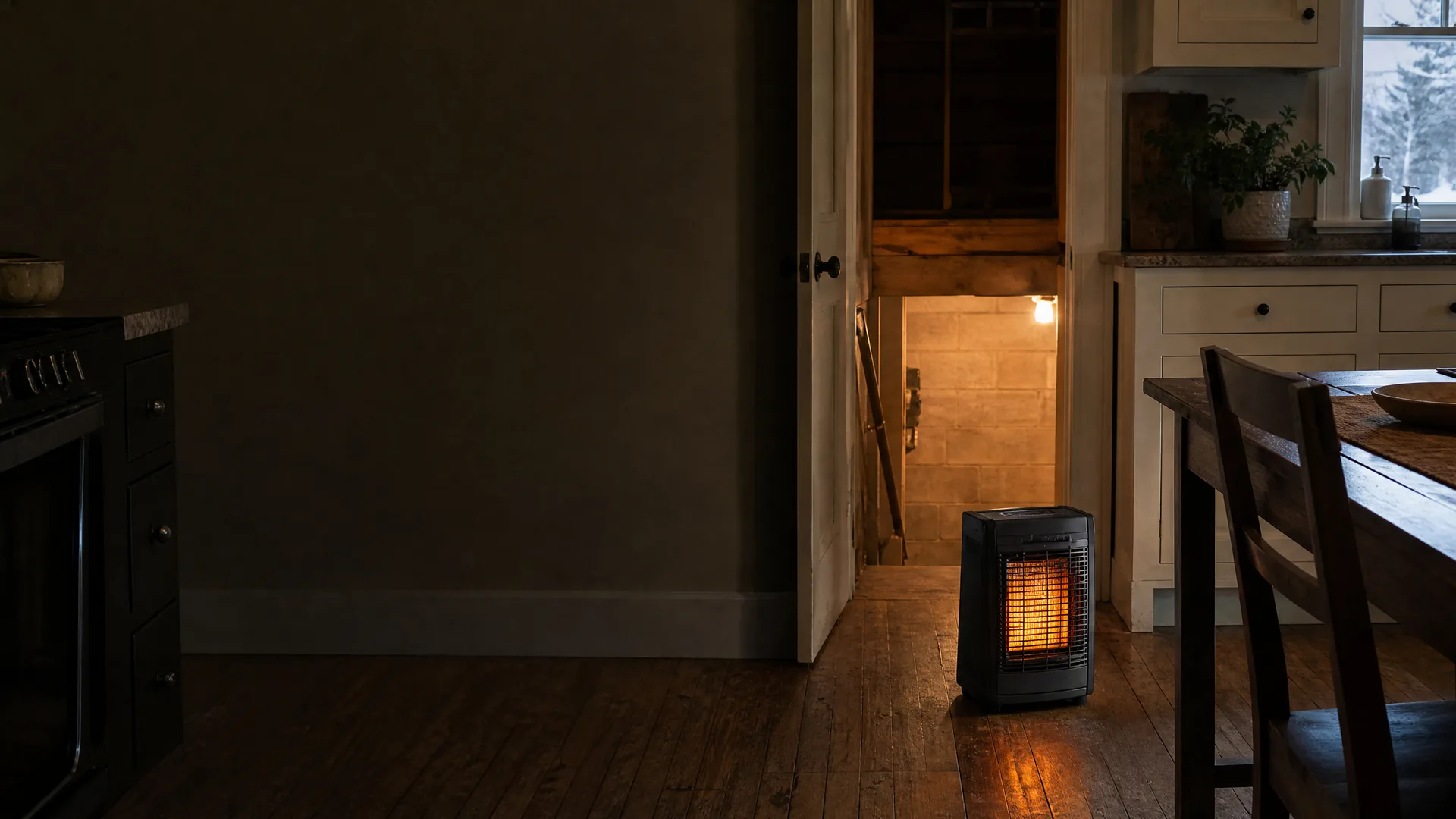
A dimly lit interior with wood plank flooring where a small portable heater with a glowing orange element sits near an open doorway, with a stove at left, kitchen cabinets and a potted plant at right, and a wooden table and chair in the foreground.

Six in the morning and the kitchen is the only warm room. The space heater sits by the table, coil glowing orange, cord running back to the one outlet that still works near the basement door. The door is open because that's where the furnace is, and you've been down there twice already with a flashlight, not sure what you were looking for. Your coffee's gone cold faster than usual. Outside it's still dark and somewhere in the 30s, the kind of morning Nevada gets maybe a dozen times a winter, not enough to make you think about the furnace until it quits on one of them. The space heater will get you through breakfast. It won't get you through a week.


Finding a pro stops being your job

One installer gets your project, so there's no bidding war over it.

There's no charge for the request.

A gray high-efficiency furnace with white PVC vent pipes stands beside sheet-metal ductwork and a water heater in an unfinished basement with concrete walls and wood framing.

A furnace running clean

PVC flue pipe, tight joints, nothing scorched nearby. This furnace is venting on its own schedule, not fighting a cracked exchanger or a clogged inducer. The ductwork above it is doing its job, and the water heater next to it isn't competing for a bad vent.

A beige gas furnace with a metal flue pipe stands in a basement against concrete block walls, beside sheet-metal ductwork, copper and white plastic pipes, and a water heater at right.

A furnace on borrowed time

Galvanized duct, copper and PVC lines running every which way, a return plenum that's seen better days. Nothing here looks like it's failed yet, but a furnace in a block basement like this one is closer to the service call than the one next to a new water heater.

Why does your furnace room smell off when it kicks on

Walk by the furnace on a cold morning and you'll know fast if something's wrong. A short chemical smell when it first fires, gone in a minute, that's usually just dust burning off the heat exchanger and it's normal. A smell that lingers, or a faint rotten egg odor, is not. Rattling when the inducer motor spins up, a yellow flame instead of blue, soot around the front panel, or the burners taking a few tries to light all point to a furnace that's wearing out or venting wrong. A furnace that can't vent properly is pushing exhaust somewhere it shouldn't, and in a closed-up house that's a real risk to the people breathing that air, not just a repair bill.

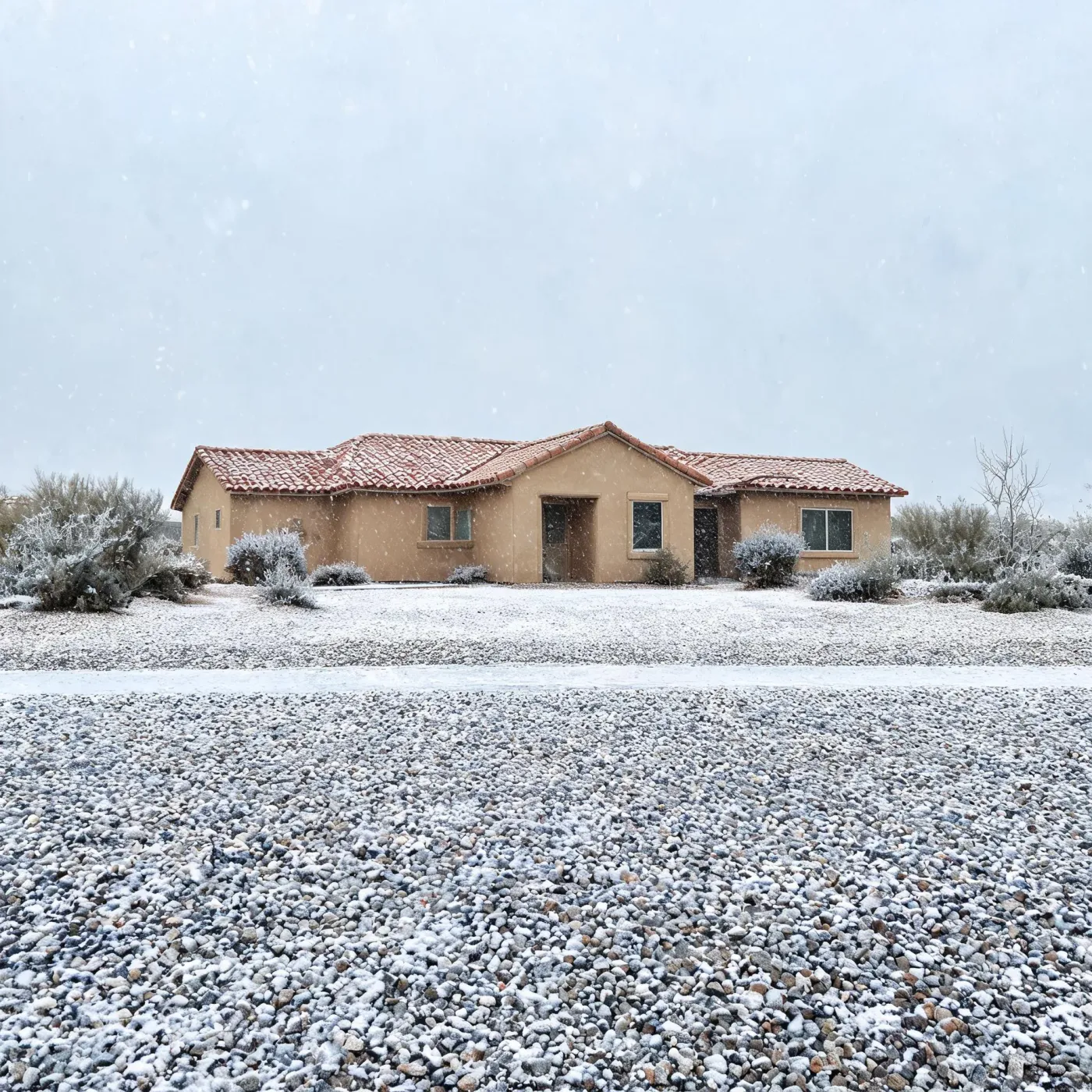
A single-story tan stucco house with a red tile roof behind a gravel yard and low desert shrubs, all lightly covered in snow under an overcast sky.

Winter nights across Nevada average 33°F, according to NOAA. That's mild enough that your furnace is rarely working hard. It fires, brings the house up, and shuts off again, over and over through the night, rather than running long stretches to fight off real cold. You'll notice this in how short each burner cycle sounds if you're near the furnace room, and in how the house never feels like it's catching up. A high-efficiency model still squeezes more heat from each cycle than a standard one does. But with nights this mild, there are fewer cold hours for that difference to add up across, which is worth knowing before you weigh the higher cost of the equipment itself.

NOAA nClimDiv 1991-2020 county normals weighted by homes

A beige high-efficiency furnace in an unfinished basement, with white PVC vent pipes, a yellow gas line, metal ductwork, and exposed wood framing on a concrete floor.
A high-efficiency furnace installed in a basement like this is quiet about it: tight PVC joints, no scorch marks, nothing straining to vent.
An older beige furnace with two louvered vent panels stands on a concrete basement floor, connected to galvanized ductwork and a metal flue pipe, with gas piping and flexible conduit on the wall behind.
An older furnace with iron gas pipe and a galvanized flue can still heat the house fine, right up until the exchanger cracks or the flue clogs.

Standard vs. High-Efficiency Furnace

Standard furnace

  • Costs less to install, and in a state with short winters that gap takes longer to close through gas savings alone.
  • Vents through metal flue pipe, which is simpler and has fewer parts that can fail.
  • Gets the job done on a 33°F night without needing to run long stretches.
  • If your gas bill is already low because winter here is short, a standard furnace won't leave much on the table.
  • Parts and repairs are familiar to any furnace tech, since most furnaces installed in Nevada for decades have been this type.

High-efficiency furnace

  • Pulls more heat out of the same amount of gas, which matters more in a house that runs the furnace a lot, even in a mild winter.
  • Needs a condensate drain and PVC venting, which can cost more to install if your furnace room isn't already set up for it.
  • The inducer motor and second heat exchanger are more parts that can need service down the road.
  • Makes more sense if you're also trying to cut gas use for reasons beyond the monthly bill.
  • Pays back slower here than in a colder state, since fewer heating hours mean less gas to save on.
  1. Burner ignites and sends exhaust into the first heat exchanger

  2. A second heat exchanger pulls more heat from that same exhaust

  3. Exhaust cools so much it turns to condensate instead of rising

  4. An inducer motor pushes the cooled exhaust out through PVC pipe

A high-efficiency furnace isn't a clear yes in Nevada, and it isn't a clear no either. Your winters are short and your power is cheap, so the gas savings take longer to add up than they would somewhere colder, and that's the honest math of it. Where it earns its keep is in a basement without a floor drain nearby, or a furnace room where venting straight up through metal flue pipe was never simple to begin with. If your current furnace is still running clean, there's no reason to swap it out early just to chase a lower gas bill that won't show up fast here. If it's old enough that replacement is already on the table, a high-efficiency model is worth pricing against a standard one before you decide. Either way, a local contractor who services both kinds every winter can tell you which one makes sense for your house, your venting, and what's already down in that basement.

A gray-haired man with a beard in a blue button-placket shirt reclines on a couch with his eyes closed, beside a sunlit window with a green plant.
A woman in a cream knit sweater sits in an armchair with her eyes closed near a window showing yellow autumn foliage, with a mug on a round wooden side table beside her.

Let someone else find the pro

Whether a high-efficiency furnace makes sense for your house comes down to things only someone standing in front of it can check: your venting, your gas line, how your old unit has held up. A local contractor who installs these every winter can look at what you have and tell you straight whether the upgrade pays off for you or whether a standard furnace is the better call. Send the request and one licensed installer near you takes it from there, so you're not stuck fielding calls from five companies trying to sort it out yourself.

Find a local pro

Only one pro gets your request, so you hear from one company.

You only hire the pro if you want to.