A local installer who puts in furnaces gets your project.
A gas furnace in Nevada usually runs 15 to 20 years. Yours isn't working against hard winters the way one in Minnesota would. It fires up in the cooler months and then sits idle most of the year while your air conditioner does the heavy work through the hot, dry summer. That light duty cycle is a big part of why furnaces here tend to reach the far end of that range rather than the near end.
What shortens that life is usually not age by itself. It's a cracked heat exchanger, an igniter that's failing to light consistently, or a blower motor that's working harder than it should. If your furnace came with the house, it's worth finding out how old it actually is, because the number on the nameplate tells you more than a guess ever will.
At some point a furnace stops being worth repairing, and the question turns from fixing to replacing. That's a different call for a unit that's 10 years old with one bad part than for one that's 18 and starting to need attention every winter. Knowing which situation you're in matters before you spend money either way.
This is where it helps to talk to someone who works on furnaces in your part of Nevada every heating season, who knows what tends to go first in this climate and what a straight installation actually involves for a home like yours. Not a call center reading from a script, not three companies competing for your number. One licensed contractor local to you, matched to your situation, reaching out directly to talk through what you're looking at.
Tell them a little about your furnace and your house, and that's who you'll hear from.
A gas furnace here typically lasts 15 to 20 years, sometimes longer. That light duty is the reason. Nevada winters are short, and once the weather turns your furnace goes back to sitting idle while the air conditioner carries the load through a long, hot summer. Fewer hours running each year means less wear on the heat exchanger and the burners, so the furnace ages slower than it would somewhere with a real winter. What actually ends its life is usually the heat exchanger cracking or the igniter and other parts wearing out from age rather than overuse. If your furnace is already past 15 years, it's worth having it looked at before you need it on a cold night, since a furnace that age can fail without much warning even if it still runs fine today.
Before you get your furnace installationAfter you get your furnace installation
How Your Furnace Actually Fires
The igniter glows hot for about 30 seconds before the gas valve opens, instead of a standing pilot staying lit all year.
A flame sensor confirms the burners actually lit, and shuts the gas valve if it doesn't detect a flame within seconds.
The inducer motor runs first to clear the heat exchanger of air before the igniter even gets power.
Heated air only moves once a limit switch confirms the heat exchanger is warm enough, which is why the blower kicks on a few seconds after the burners.
Short cycles like this, on and off instead of running steady, put more wear on the igniter and the motor than a long steady run would.
A cracked heat exchanger is the failure that ends a furnace early here, more often than the burners or the blower giving out.
Start the furnace and there's an order to what happens, even though it all takes less than a minute. The inducer motor kicks on first and pulls air through the heat exchanger, clearing it out before anything gets hot. Only after that does the igniter get power. It glows for about 30 seconds, building up heat until it's hot enough to light the gas. Most furnaces now use this hot surface igniter instead of a standing pilot, so nothing is burning gas and sitting lit when the furnace isn't running. Once the igniter lights the burners, a flame sensor checks that it actually worked. If it doesn't sense a flame within a few seconds, it shuts the gas valve rather than let gas keep flowing unburned. The blower doesn't start right away either. It waits on a limit switch, which only lets air move once the heat exchanger is actually warm. That's why you feel warm air a few seconds after you hear the burners catch. Because a Nevada furnace only runs through a short stretch of the year, it's doing a lot of these start and stop cycles rather than one long steady burn, and that's harder on the igniter and the inducer motor than a furnace that runs for months straight. Over enough winters, the part most likely to end a furnace's life here isn't the igniter or the blower. It's a cracked heat exchanger.
One installer gets your project, so there's no bidding war over it.
Sending the form costs nothing.
Short runtime, less wear
A furnace wears out from the number of times it cycles on and off, not from the calendar. In Nevada, the burners and heat exchanger only see real work a few months a year. Fewer heat cycles means less stress on the igniter and the heat exchanger over the furnace's life, which is why one here can still be running well past the age a cold-climate furnace would be worn out.
What finally wears it down
When a furnace this age does fail, it's usually the heat exchanger cracking from metal fatigue after years of heating and cooling, or the igniter finally burning out after thousands of cycles. A local contractor who services furnaces every winter knows which of these tends to go first in a unit that's run 15 to 20 years, and can tell you whether yours is worth repairing or replacing.
Is your furnace telling you it's done?
You'll notice it first when the furnace comes on. A bang or rattle at startup, a burner smell that lingers longer than it should, or a short cycle that shuts off before the room ever warms up. Some homeowners catch a furnace that takes two or three tries to light, or a blower that keeps running after the house is warm. Since Nevada furnaces only run a few months a year, these signs can sit unnoticed for a while, easy to write off as nothing. Left alone, a furnace that struggles to light or cycles oddly can fail on one of the coldest nights of the year, or in a worse case, leak carbon monoxide into the house.
Running as it should
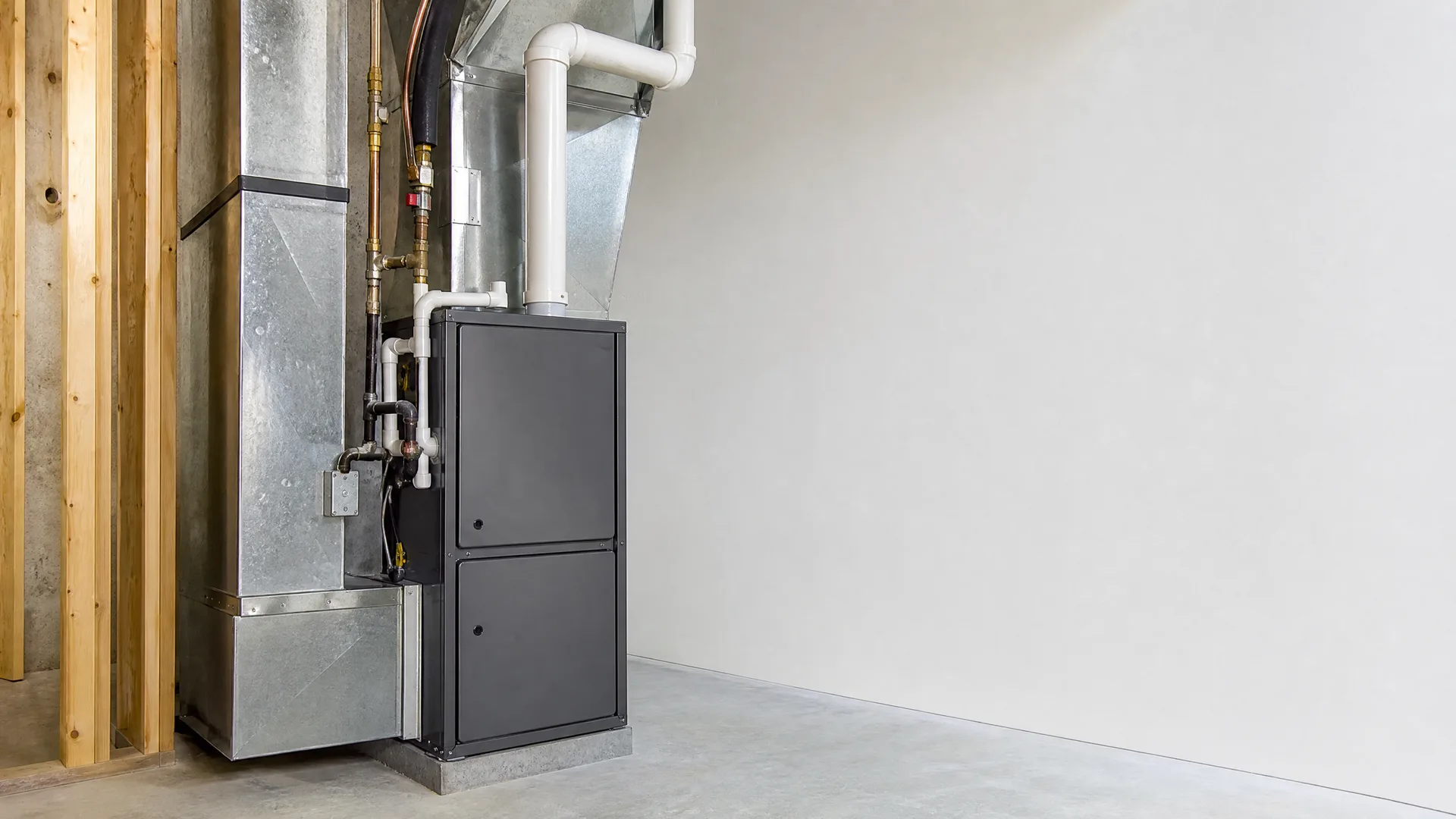
This is what a furnace in good shape looks like: clean lines run to the ductwork, the gas piping is sound, and the exhaust vents out through PVC without any sign of strain. At this stage it's doing exactly what it's built for, cycling on for short stretches and shutting off again.
Showing its age
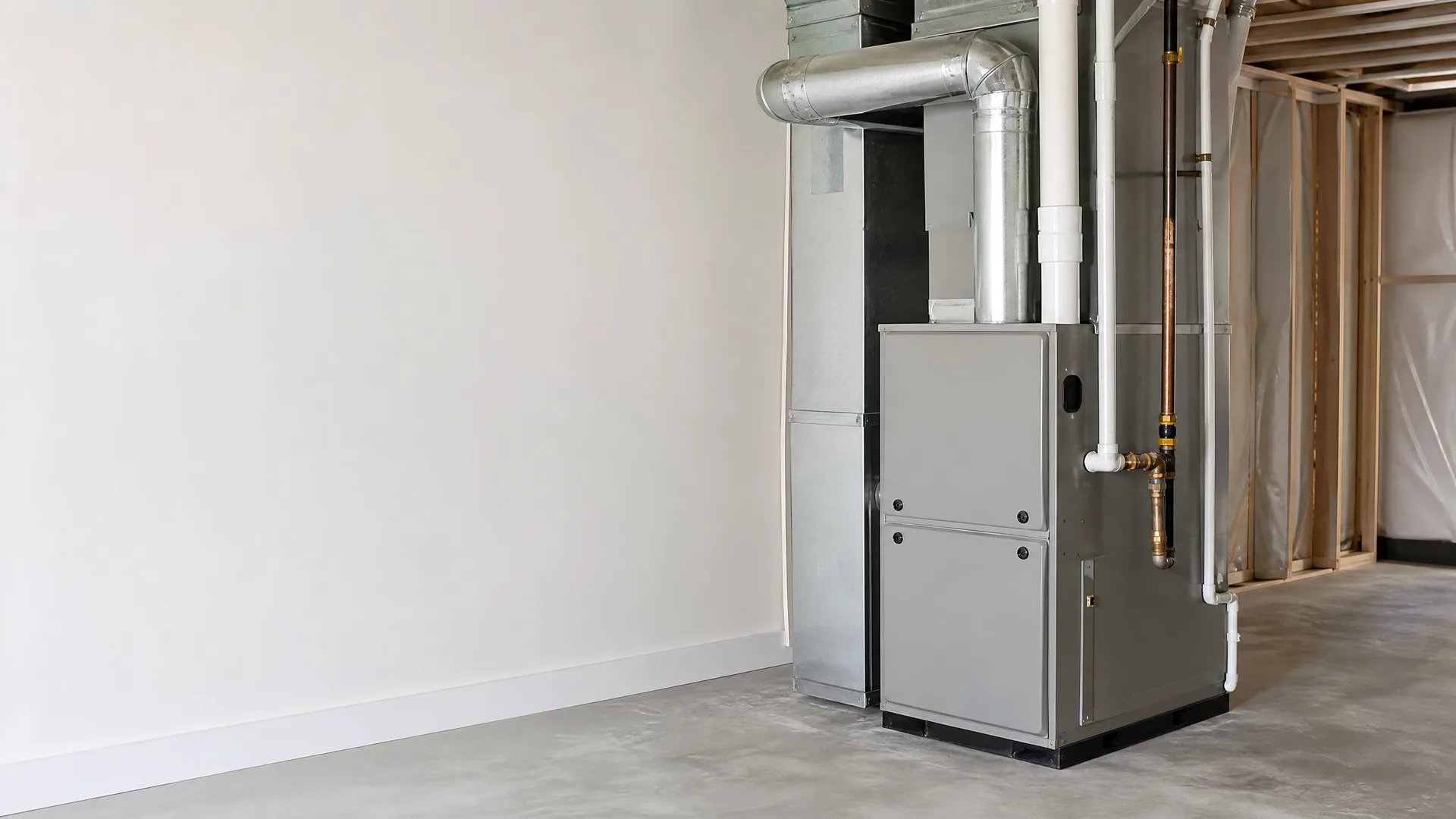
Dust has settled over the cabinet and the copper gas line shows its years. A furnace this old has been through a lot of startups and shutdowns. Once it starts making noise at startup or won't hold a flame, it's telling you it's closer to the end than the beginning.
1
The thermostat calls for heat and signals the control board
2
The inducer motor starts and clears the heat exchanger of air
3
A pressure switch confirms draft before any gas is allowed
4
The igniter glows hot for about 30 seconds
Winter nights average 33°F statewide
Nighttime lows average 33°F across December, January and February here. That's mild enough that your furnace isn't fighting hard to keep up, so it's cycling on and off rather than running flat out for hours. Less strain on the burners and heat exchanger each winter adds up over the years.
NOAA nClimDiv 1991-2020 county normals weighted by homes
15 to 20 years, light duty the whole way
A furnace in Nevada earns that 15 to 20 year life because of how little it's asked to do. Short winters, mild nights, and an air conditioner that takes over the rest of the year add up to a furnace that just doesn't wear the way one back east would. If yours is still running clean, with no rattle or short cycling, there's no reason to rush a decision.
When it's time to replace it, the furnace itself is only part of what matters. Sizing it right for your house, venting it correctly, and setting it up so it runs the way it's supposed to for the next couple decades is work best left to someone who installs these year-round in this state and knows what tends to go wrong here. Answer a few questions about your home and you'll be connected with one licensed local contractor suited to the job, not a handful of companies competing for your callback.