Tell us about the job
Takes about a minute. No obligation.
A furnace repair in Storey County starts with the parts that cycle hardest: the burner, the ignition system, and the heat exchanger. Homes in Storey County, NV run heat about eight months a year, from October through May. That runtime adds up across the ignition system specifically, which fires every time the furnace calls for heat through a cold stretch. Cracks in the heat exchanger and worn igniter assemblies are what contractors find repeatedly here, not because the equipment is poor but because the burner hours are real. A contractor who skips that inspection and replaces only what visibly failed leaves the underlying wear in place.
Ductwork and cabinets can look serviceable from the outside while the internals tell a different story. Half the homes in Storey County, Nevada were built in 1989 or earlier (2020-2024 ACS 5-year). A furnace that has run through that many Nevada winters tends to show fatigue inside the heat exchanger and at the secondary components around it, and a contractor cannot price the repair from the outside. Once the unit is open, what they find sets the scope.
The Parts of a Furnace a Contractor Checks First
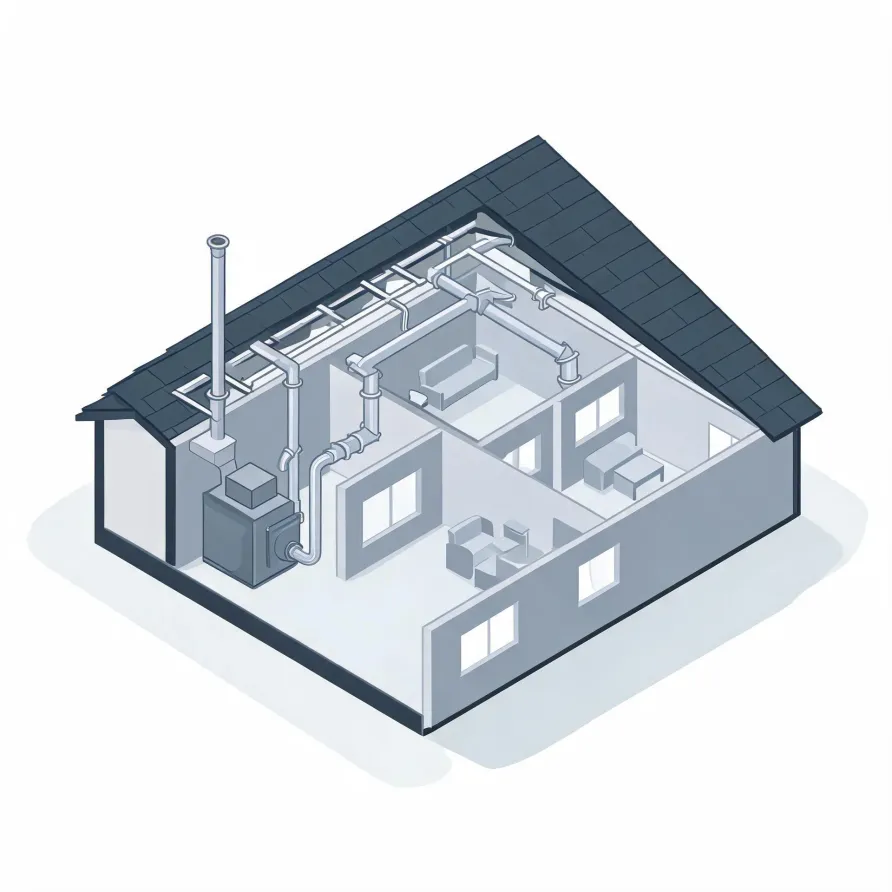
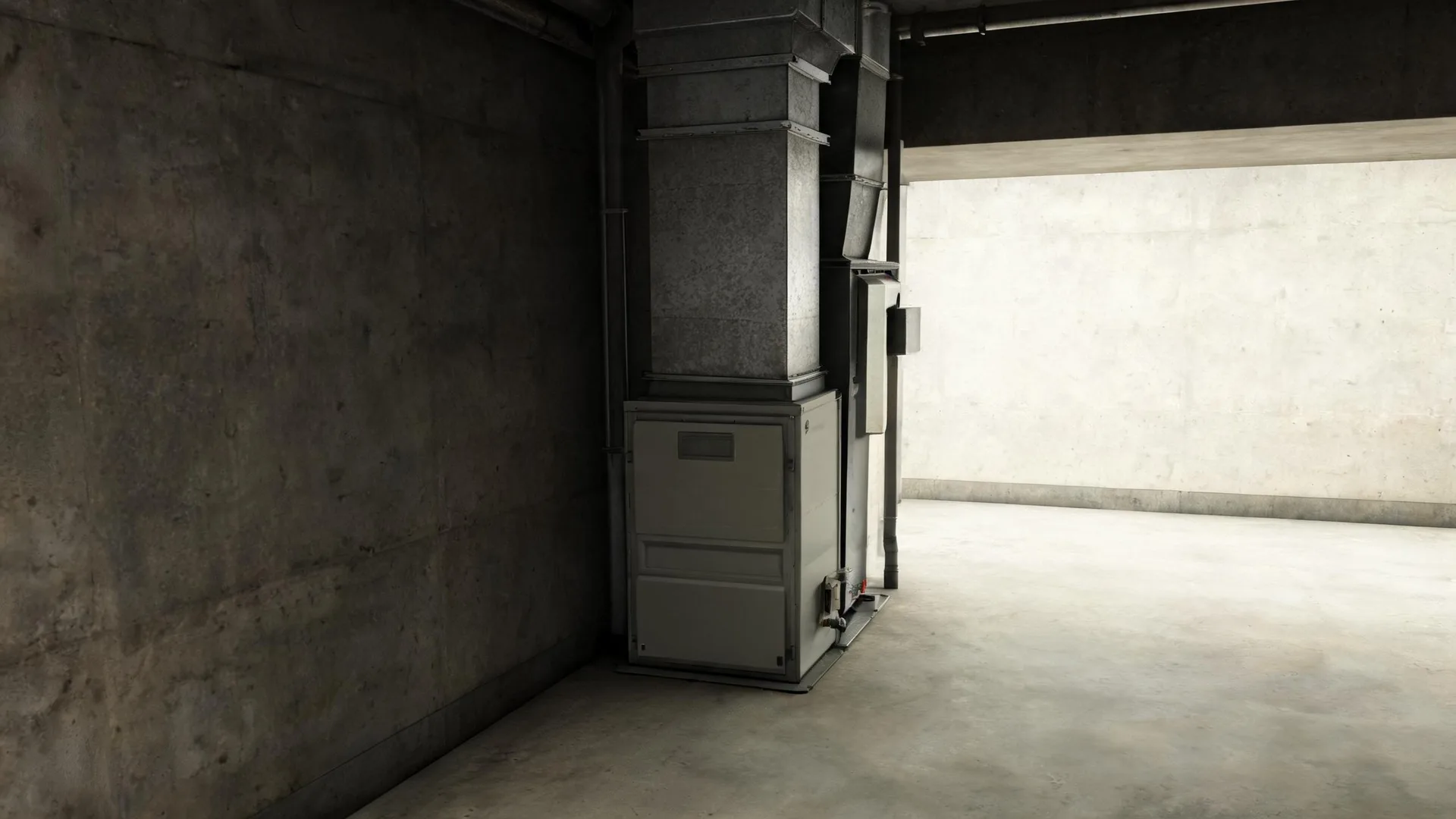
The furnace itself sits in a utility room, basement, or closet and is the heart of the system. Inside it, the heat exchanger and burner assembly are where most failures show up. A cracked heat exchanger, a faulty igniter, or a burner that won't fire all trace back to that cabinet.
The blower motor pulls air across the heat exchanger and pushes it into the supply side of the house. The flue pipe carries combustion gases out through the wall or roof. Both get looked at closely during a repair call, since a failing blower or a blocked flue can mimic or cause problems elsewhere in the system.
The drawing shows a typical furnace layout, and a licensed contractor determines what applies to your specific installation.
Get matched in Storey CountyStorey County by the Numbers
299 severe weather events were recorded in Storey County, Nevada between 2015 and 2024.
NOAA National Centers for Environmental Information, Storm Events Database, bulk CSV export, events 2015-01-01 through 2024-12-31.Half the homes in Storey County, Nevada were built in 1989 or earlier (2020-2024 ACS 5-year).
U.S. Census Bureau, 2020-2024 American Community Survey 5-Year EstimatesStorey County, Nevada holds 2,038 housing units (2020-2024 ACS 5-year).
U.S. Census Bureau, 2020-2024 American Community Survey 5-Year EstimatesOwners occupy 96.1% of the occupied homes in Storey County, Nevada (2020-2024 ACS 5-year).
U.S. Census Bureau, 2020-2024 American Community Survey 5-Year EstimatesCodes & Standards Governing Furnace Repair in Storey County, Nevada5 sourced rules and standards
What HVAC Repair Looks Like in Storey County
Non-weatherized gas furnaces manufactured on or after November 19, 2015 must reach 80.0 percent AFUE.
Non-weatherized oil-fired furnaces manufactured on or after November 19, 2015 must reach 83.0 percent AFUE.
Mobile home gas furnaces manufactured on or after November 19, 2015 must reach 80.0 percent AFUE.
Non-weatherized gas furnaces manufactured on or after December 18, 2028 must reach 95.0 percent AFUE, up from the 80.0 percent minimum that applies to units manufactured before that date.
Licensing Rules for HVAC Repair in Storey County, Nevada
In Nevada refrigeration and air-conditioning work is specialty contracting, and a general building contractor may not perform it without holding the licence for that specialty.
Weather Stress on HVAC Equipment in Storey County
Furnaces work harder when outdoor conditions swing hard, and those swings add up inside the equipment over time. Repair demand in Storey County follows the weather, which makes local pattern data a reasonable starting point for understanding what a furnace here is up against.
299 severe weather events, 2015–2024. Source: NOAA National Centers for Environmental Information, Storm Events Database.