Tell us about the job
Takes about a minute. No obligation.
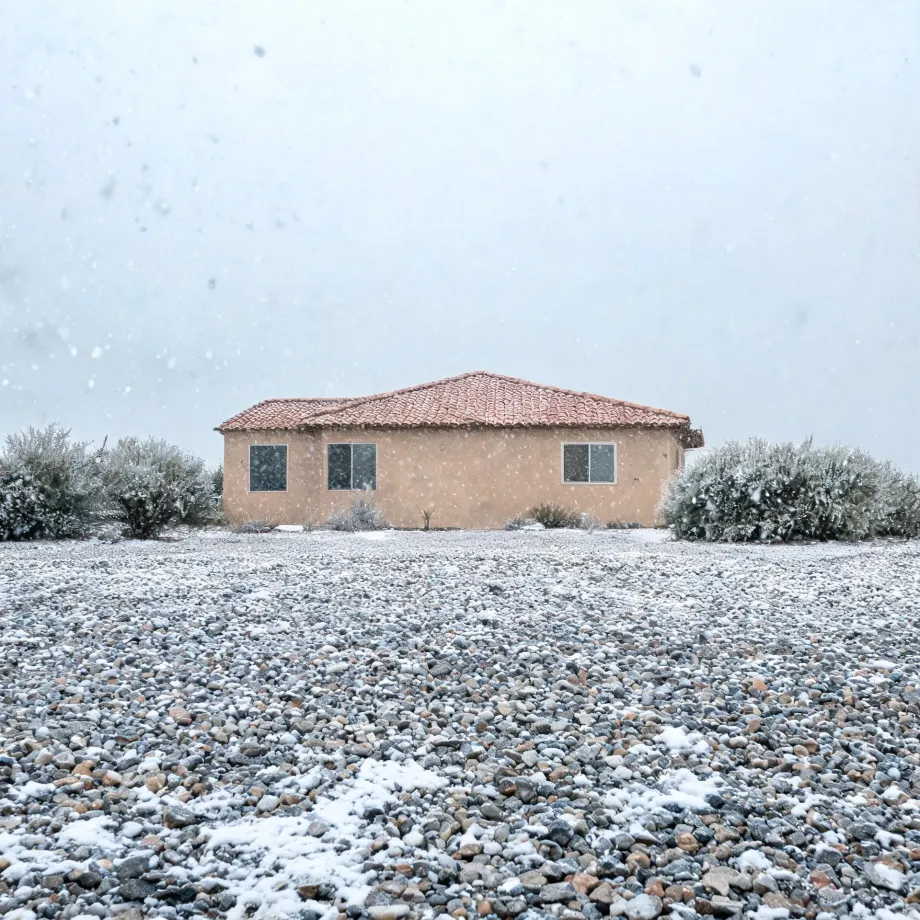
Sizing a furnace for this area starts with how long the burner actually runs. Homes in Clark County, NV run heat about six months a year, from November through April. A heat exchanger and ignition system that cycle through a season that long accumulate stress that a contractor installing the wrong capacity will see accelerate: a unit working harder than it should because the load calculation was not done for this specific house. The installer has to establish what the structure actually demands before the equipment is chosen, because an undersized furnace does not fail gradually here, it fails during the months it cannot stop running.
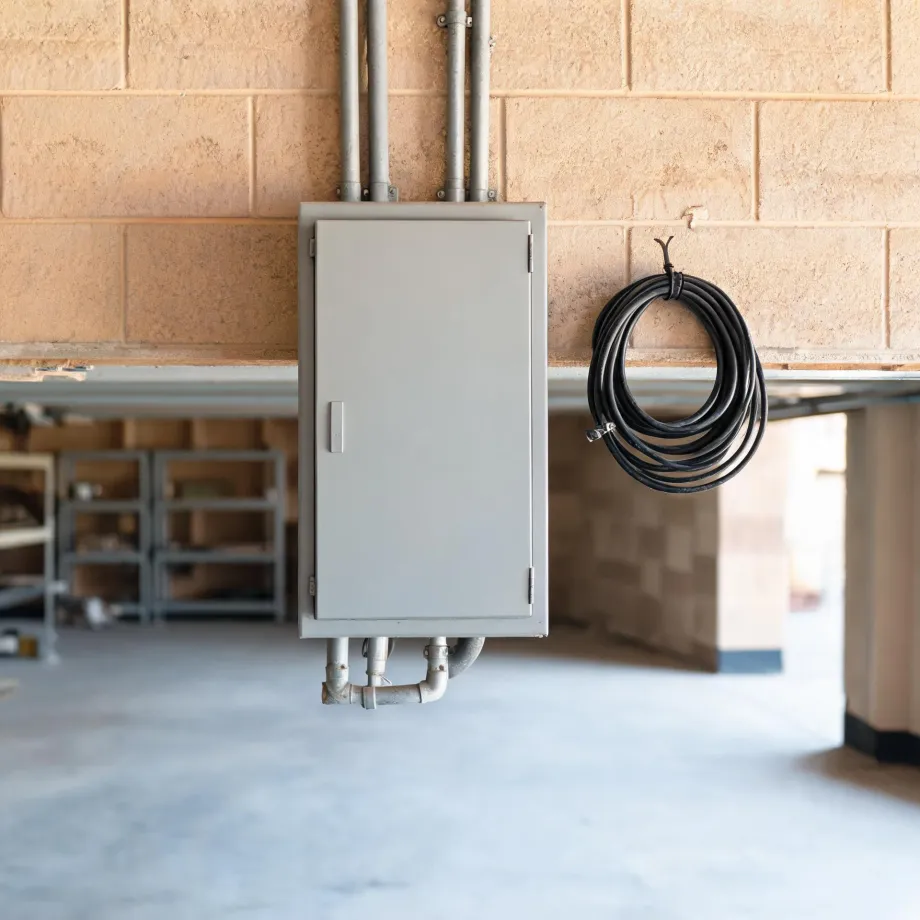
Ductwork laid in a house built in the last few decades was sized and routed for equipment close in output to what a contractor installs today. Half the homes in Clark County, Nevada were built in 1998 or earlier (2020-2024 ACS 5-year). That means the gap between what the house was built for and what a new furnace demands is narrow enough that existing duct runs are worth measuring before assuming they need replacement. The electrical service reads the same way. A contractor quoting a furnace installation here spends less time on whether the house can carry the job and more time on matching the unit to the actual load the rooms present.
What Gets Installed With a New Furnace
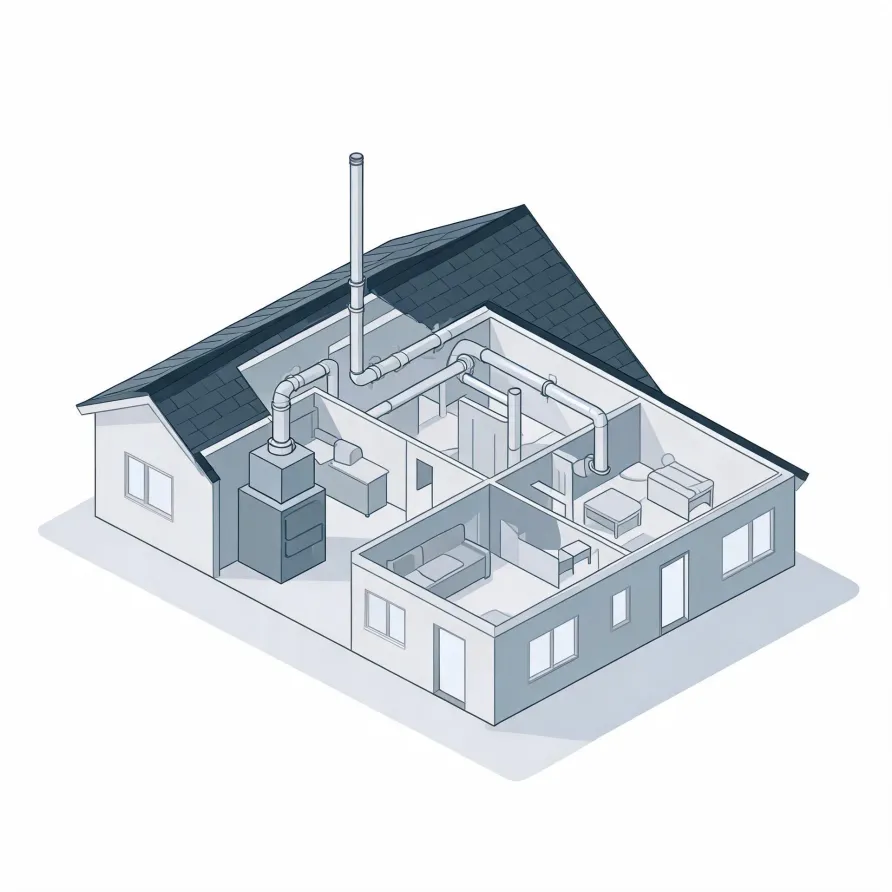
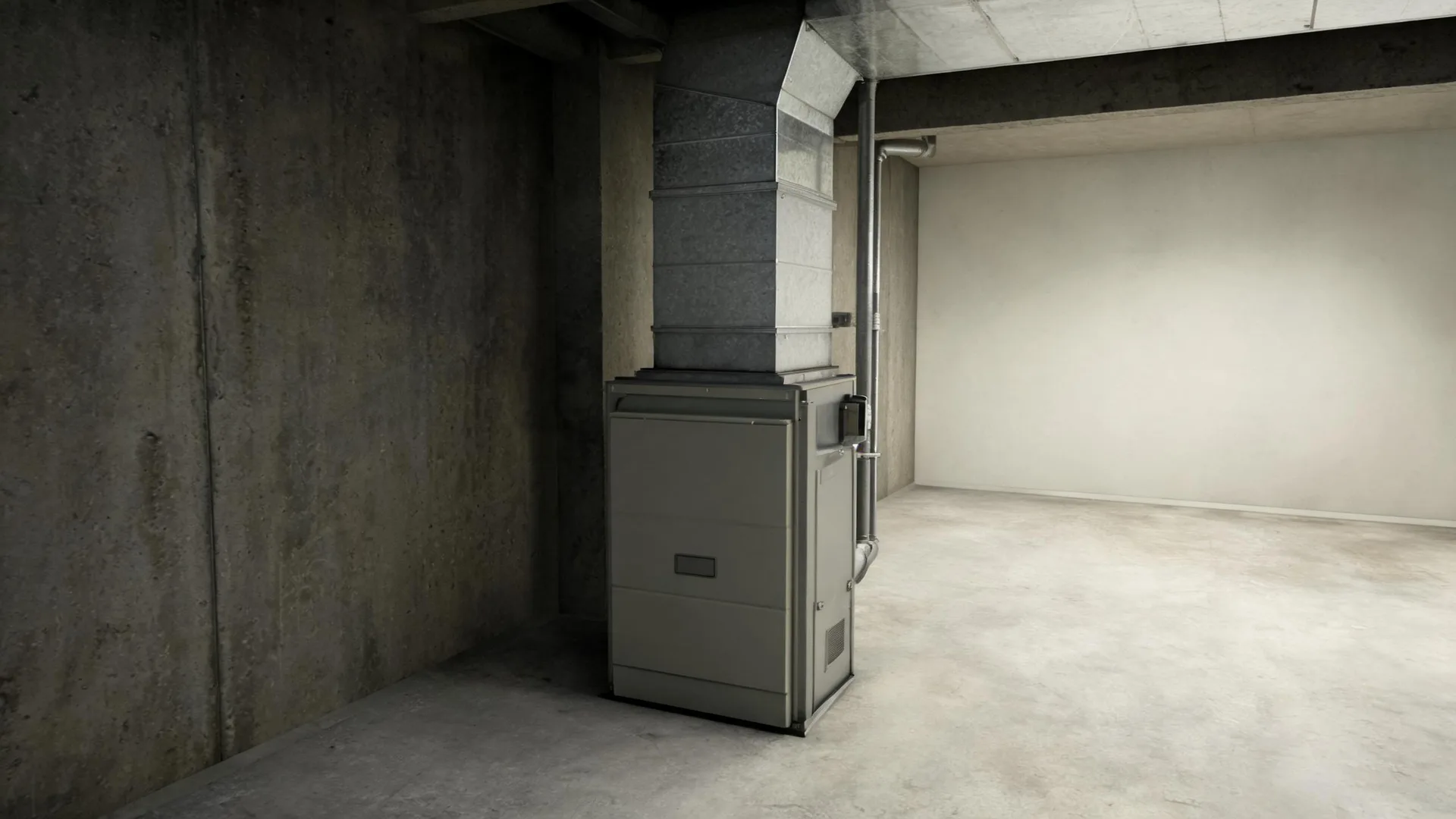
The furnace itself sits in a mechanical room, basement, closet, or garage and is the unit that produces heat. A burner assembly inside it ignites the fuel, a heat exchanger transfers that heat to air moving through the cabinet, and a blower motor pushes the warmed air out into the home.
The flue pipe runs from the furnace to an exterior wall or roof and carries combustion gases out of the house. Alongside it, a gas valve controls fuel delivery to the burner, and a thermostat mounts on an interior wall to tell the system when to fire and when to stop.
The drawing shows a typical layout, and a licensed contractor determines exactly what applies to this house.
Get matched in Clark CountyClark County, by the numbers
389 severe weather events were recorded in Clark County, Nevada between 2015 and 2024.
NOAA National Centers for Environmental Information, Storm Events Database, bulk CSV export, events 2015-01-01 through 2024-12-31.Half the homes in Clark County, Nevada were built in 1998 or earlier (2020-2024 ACS 5-year).
U.S. Census Bureau, 2020-2024 American Community Survey 5-Year EstimatesClark County, Nevada holds 948,995 housing units (2020-2024 ACS 5-year).
U.S. Census Bureau, 2020-2024 American Community Survey 5-Year EstimatesOwners occupy 57.8% of the occupied homes in Clark County, Nevada (2020-2024 ACS 5-year).
U.S. Census Bureau, 2020-2024 American Community Survey 5-Year EstimatesFurnace Installation Rules for Clark County, Nevada5 codes & standards
What the installation actually looks like
Non-weatherized gas furnaces manufactured on or after November 19, 2015 must reach 80.0 percent AFUE.
Non-weatherized oil-fired furnaces manufactured on or after November 19, 2015 must reach 83.0 percent AFUE.
Mobile home gas furnaces manufactured on or after November 19, 2015 must reach 80.0 percent AFUE.
Non-weatherized gas furnaces manufactured on or after December 18, 2028 must reach 95.0 percent AFUE, up from the 80.0 percent minimum that applies to units manufactured before that date.
Licensing and Legal Requirements in Clark County, Nevada
In Nevada refrigeration and air-conditioning work is specialty contracting, and a general building contractor may not perform it without holding the licence for that specialty.
Severe Weather Events in Clark County
Clark County's climate puts real demands on heating equipment, and those demands shift with what the weather does year to year. A furnace sized and installed for local conditions handles that load differently than one specified for somewhere else.
389 severe weather events, 2015–2024. Source: NOAA National Centers for Environmental Information, Storm Events Database.